Tag: bangladesh

  • HAHRI Response to NYT’s “Sorting Facts From Fiction…” Article on Bangladesh

    HAHRI Response to NYT’s “Sorting Facts From Fiction…” Article on Bangladesh

    (This report utilizes Samya for Hindu News  by American Hindus Against Defamation (AHAD) )

    Hindus Advancing Human Rights (HAHRI) Response to NYT: Addressing Persecution of Hindus in Bangladesh

    The New York Times article, published on Dec. 24, 2024, “Sorting Fact From Fiction as Fear Engulfs Bangladesh’s Hindus,” attempts to address the rising concerns of violence against Hindus in Bangladesh. While the report touches upon significant issues, it underplays the systematic nature of persecution faced by the Hindu community. This response seeks to present a balanced, research-based narrative by addressing gaps in the NYT article and providing evidence-backed insights into the issue.

    The Yunus Regime and Its Impact

    The NYT report references the tenure of the Yunus regime, highlighting its focus on economic development and microfinance initiatives. However, it fails to explore how governance under Yunus inadvertently created conditions that fueled Islamist extremism. Despite its global acclaim, Yunus’ governance left significant power vacuums at the grassroots level, enabling radical elements to grow unchecked.

    The rise of organizations like Hefazat-e-Islam during this period underscores the creeping influence of hardline Islamist ideologies in Bangladesh. Their public demonstrations against secular governance, combined with targeted attacks on Hindu communities, reflect an organized effort to suppress religious minorities. This trajectory sharply contrasts Yunus’ international image as a progressive leader, revealing a dichotomy between his economic policies and the socio-political reality under his rule.

    Systematic Targeting, Not Isolated Incidents

    The NYT article frames violence against Hindus as “sporadic” and resulting from “localized disputes.” However, historical patterns and recent incidents suggest otherwise. Events like the 2021 Durga Puja attacks, where over 100 temples and religious sites were desecrated within days, underscore the coordinated nature of such violence. These incidents often coincide with political turmoil or key cultural events, making it clear that they are not isolated but reflective of deeper societal biases.

    Furthermore, the continuous desecration of Hindu temples—documented as far back as the 1980s and continuing into 2024—highlights a systematic effort to erode Hindu cultural and religious identity. Reports such as “Hindu Temples: What Happened to Them?” by Sita Ram Goel provide a grim historical perspective, tracing how religious persecution has persisted over centuries in the region, evolving in form but not in intent.

    Overlooked Historical and Contemporary Evidence

    The NYT report acknowledges the Hindu population decline in Bangladesh but fails to correlate this with historical and systemic factors. Census data reveal that the Hindu population in Bangladesh has dwindled from 22% in 1951 to less than 8% today. This decline is not just a demographic trend but a consequence of sustained persecution, including forced conversions, land seizures, and targeted violence.

    Even contemporary examples point to the dire situation. In 2024 alone, several Hindu households were reportedly attacked during local elections, with victims citing religious identity as the primary motive. Such incidents rarely receive widespread attention, contributing to the perception that the violence is less pervasive than it actually is.

    Economic Disparity as a Misleading Explanation

    The article suggests that economic disparities and communal tensions fuel Hindu-Muslim conflicts in Bangladesh. While economic differences exist, they are often weaponized to justify religious violence rather than being the root cause. Hindu communities, particularly in rural areas, frequently face targeted expropriation of property under the guise of “economic disputes.” The Vested Property Act, a law allowing the state to confiscate property from “enemies of the state,” disproportionately affected Hindus, stripping them of land and livelihoods.

    These systemic issues reflect institutionalized discrimination, not random economic grievances. The lack of legal recourse for Hindu victims further exacerbates their vulnerability, fostering a culture of impunity for perpetrators.

    Misplaced Focus on Indian Policies

    The NYT piece shifts focus to India’s policies, particularly under the BJP-led government, framing them as exacerbating cross-border tensions. The Citizenship Amendment Act (CAA) is often cited as an example. However, this narrative overlooks the humanitarian intent behind the CAA, which provides refuge to persecuted minorities from neighboring countries, including Bangladeshi Hindus. Rather than exacerbating tensions, such policies highlight the need for accountability from countries like Bangladesh in safeguarding minority rights.

    Revisiting Religious Freedom in Bangladesh

    Bangladesh’s constitution proclaims secularism, but ground realities often contradict this principle. Religious freedom is compromised by institutional biases, mob violence, and the societal stigma associated with minority identities. Organizations such as Amnesty International have documented numerous cases where authorities failed to protect minorities or prosecute perpetrators. A broader acknowledgment of these systemic issues is essential for addressing the root causes of persecution.

    International and Regional Implications

    The persecution of Hindus in Bangladesh is not just a local issue but a regional concern with far-reaching implications. Targeted violence against any minority undermines the region’s stability and calls into question global commitments to human rights. Governments, international organizations, and civil society must collaborate to ensure that vulnerable communities receive protection and justice.

    A Call for Comprehensive Engagement

    The narrative around Hindu persecution in Bangladesh requires a nuanced and comprehensive approach. Here are some key considerations for stakeholders:

    1. Amplifying Marginalized Voices: To present a balanced narrative, media outlets and international organizations must prioritize the voices of affected communities. Firsthand accounts of survivors often reveal the systemic nature of violence better than official statements.
    2. Evidence-Based Reporting: Journalistic integrity requires thoroughly examining historical, legal, and societal contexts. Selective reporting risks perpetuating misconceptions and undermining the severity of the issue.
    3. Regional Cooperation: India and Bangladesh must engage in constructive dialogue to address cross-border concerns while ensuring minority protection in Bangladesh.
    4. Advocacy and Accountability: Civil society groups and international organizations should advocate for stronger legal protections for minorities in Bangladesh and hold perpetrators accountable through transparent judicial processes.

    Conclusion: Toward an Informed Understanding

    The NYT article opens a conversation but leaves critical gaps in addressing the systemic persecution faced by Hindus in Bangladesh. A more profound engagement with historical evidence, contemporary incidents, and regional dynamics is crucial for fostering an informed and just discourse. Only by acknowledging and addressing the root causes of these issues can we hope to build a future where all communities can coexist with dignity and equality.

    HAHRI is an initiative of HinduPACT


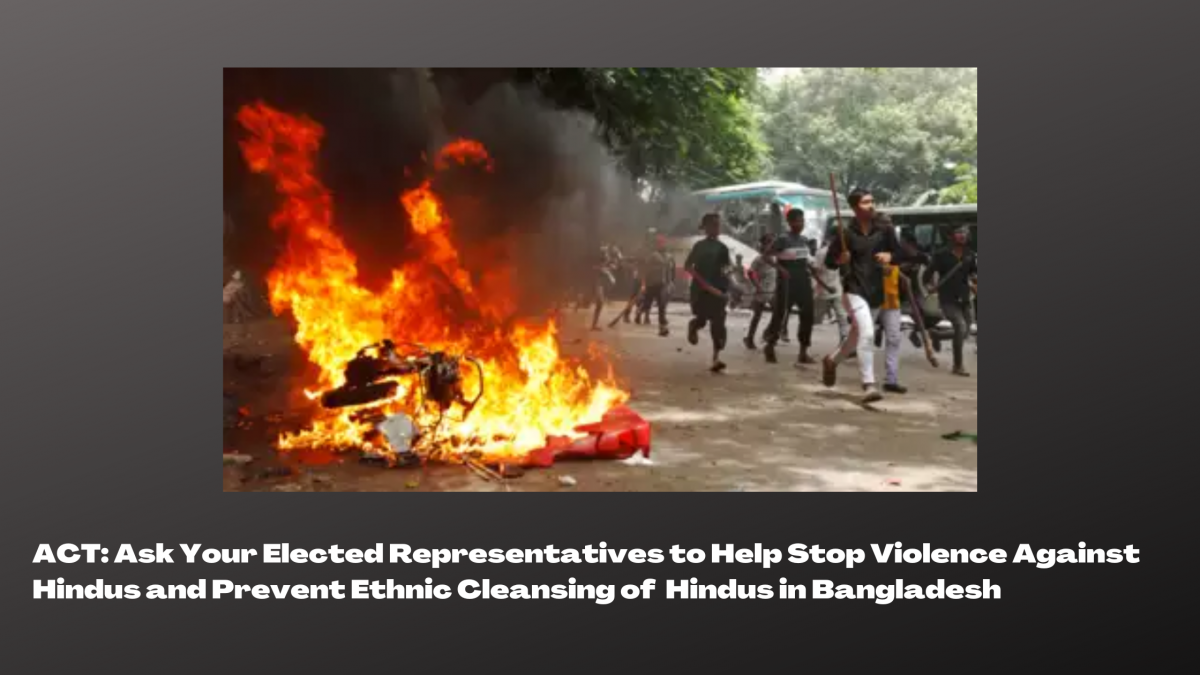
  • ACT: Ask Your Elected Representatives Help Prevent Ethnic Cleansing of Bangladesh Hindus

    ACT: Ask Your Elected Representatives Help Prevent Ethnic Cleansing of Bangladesh Hindus

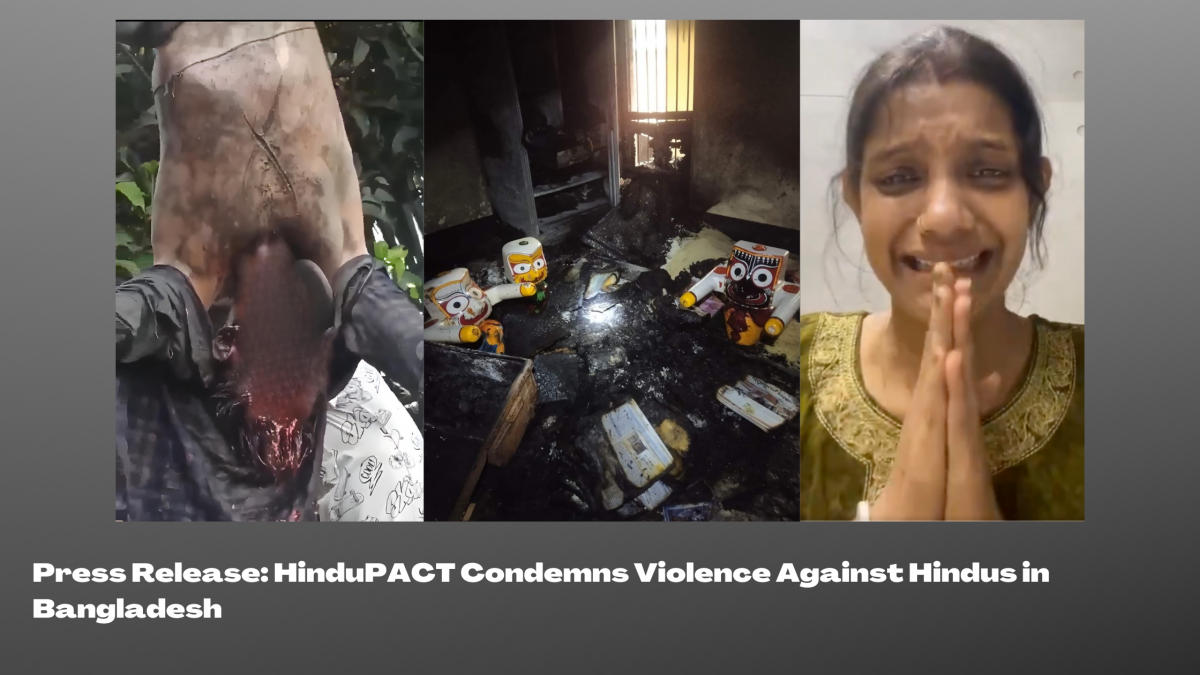
  • Press Release: HinduPACT Condemns Violence Against Hindus in Bangladesh

    Press Release: HinduPACT Condemns Violence Against Hindus in Bangladesh

    August 5, 2024

     HinduPACT vehemently condemns the recent spate of violence against the Hindu community in Bangladesh, culminating in the brutal murder of two councilors and the vandalization of the sacred Kali temple and ISKCON temple during anti-government protests.

    This appalling act is not just an attack on individuals but a direct assault on the Hindu community for their pluralistic beliefs.  We stand in solidarity with the Hindu community in Bangladesh and demand immediate action from the Bangladeshi government to bring the perpetrators to justice and ensure the safety and security of all its citizens, irrespective of their religious beliefs.

    The international community must also take note of these heinous crimes and support measures to protect religious minorities worldwide. We call upon human rights organizations and governments around the globe to condemn these acts and work towards safeguarding the rights of all minority communities.

    Deepti Mahajan, co-convenor of HinduPACT, said:

    With the coup in Bangladesh, the 10 million Hindus are sitting on a ticking bomb of genocide. Reports are coming in from inside Bangladesh of unimaginable torture, killings, and burning of Hindi temples. This instability in the region is extremely dangerous for democracies like India and an inevitable threat to the Hindus in Pakistan as well. We need the eyes and ears of all Western countries at this instability in Asia and demand the safety of the minorities in Bangladesh.

    Ajay Shah, President of VHPA and co-Convenor of HinduPACT commented:

    This incident is a grim reminder of the atrocities committed against Hindus during the 1971 genocide, where an estimated 3,000,000 Hindus were brutally killed. The echoes of such historical horrors underscore the urgent need for vigilance and protection of religious minorities.

    HinduPACT remains committed to advocating for the rights and safety of Hindus globally and will continue to work tirelessly to ensure justice is served in this grievous matter.

  • Press Release: Historic Bi-Partisan Resolution Recognizing 1971 Bangladesh Genocide Introduced on Capitol Hill

    Press Release: Historic Bi-Partisan Resolution Recognizing 1971 Bangladesh Genocide Introduced on Capitol Hill

    FOR IMMEDIATE RELEASE       

    October 15, 2022                                                              

    WASHINGTON, D.C –

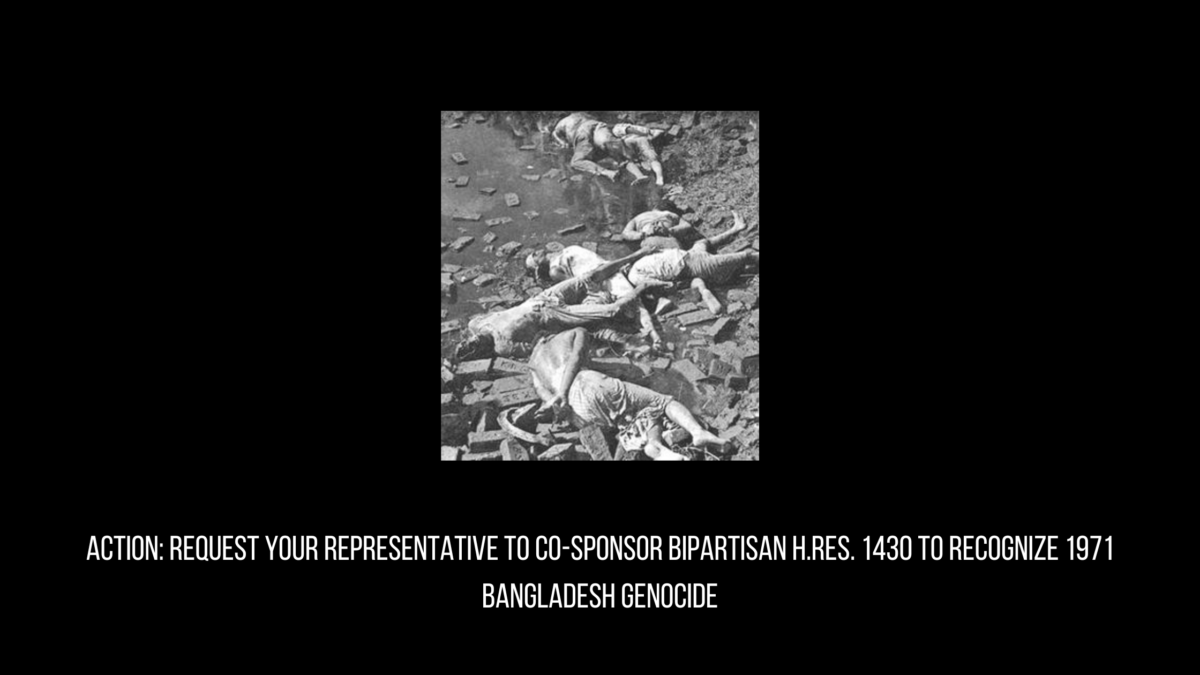
    October 14, 2022 will be remembered as a historic day.  On this day the bipartisan H. Res. 1430, seeking formal recognition of of the 1971 Bangladesh genocide, was introduced by Congressional representatives, Steve Chabot and Ro Khanna. For more than a year, the Ohio chapter of HinduPACT led the campaign with the support of members of the Bangladeshi community from across the US.

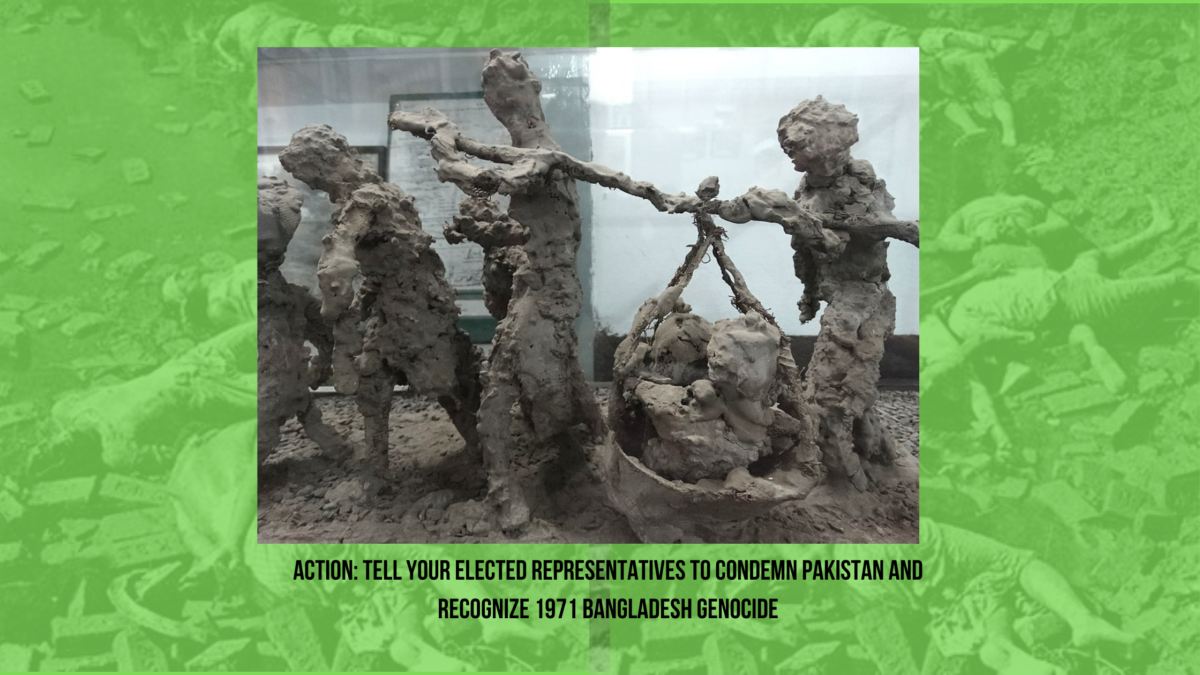
    The resolution calls for punishment under international law, against war criminals in the Pakistan Army and their allied Islamists, who were responsible for the murder of 3 million people in East Pakistan (now Bangladesh) over the course of 9 months.  An overwhelming majority of the victims were Hindus as they were specifically targeted for extermination.

    Renu Gupta, HinduPACT’s chapter Lead in Cincinnati, said,

    “Today, Cincinnati has made history. Congressman Steve Chabot has been kind enough to understand our concerns and taking up the resolution to recognize Pakistan’s crimes in 1971 as genocide. I thank our friend, Deputy Mayor of Blue Ash, Pramod Jhaveri, for sensitizing Congressman Chabot about the issue. I want to thank all the volunteers in Cincinnati for making it possible.”

    Amulya Tyagi, a HinduPACT member from Cincinnati, said,

    “From the bottom of our heart we thank Congressman Steve Chabot for showing the conviction and courage to introduce this resolution. A special mention must be made of the Congressman’s Foreign Policy Advisor, Mark Erste, for leading this effort and working with the HinduPACT team in bringing HR 1430 to reality. Mark’s team also worked with Congressman Ro Khanna’s staff resulting in the Congressman co-sponsoring the resolution. We sincerely thank Congressman Ro Khanna and his staff for this.”

    Vinod Sudhakar, President of the Hindu Temple of Greater Cincinnati, said,

    “As a Cincinnatian, I am extremely proud of Congressman Steve Chabot for showing great courage and resolve in recognizing the state sponsored massacre of millions in East Pakistan (now Bangladesh) in 1971 as a genocide.  On behalf of the Hindus in Cincinnati and every person that cares for and values human life we applaud Congressman Chabot for setting an example for all political leaders in this country to choose justice and resolute action versus political convenience and inaction.”

    Ajay Shah, Convenor of HinduPACT, said,

    “Hindus have suffered countless genocides over past 1000 years.  The world has ignored these genocides and textbooks have remained silent. We thank Rep. Chabot and Rep. Khanna for  proposing this resolution. We hope that this resolution passes unanimously.”

    About HinduPACT

    HinduPACT brings Hindu ethos and values of unity in diversity, plurality, compassion and mutual respect amongst religions to policy and advocacy for human rights, environmental protection, racial and gender equality. HinduPACT activities include hinduvote.org

  • ACT: Ask your Representative to Co-Sponsor H.Res. 1430 to Recognize 1971 Bangladesh Genocide

    ACT: Ask your Representative to Co-Sponsor H.Res. 1430 to Recognize 1971 Bangladesh Genocide

  • ACTION: Ask Elected Representatives to Condemn Bangladesh Genocide 1971

    ACTION: Ask Elected Representatives to Condemn Bangladesh Genocide 1971

  • HinduPACT Stands in Solidarity with Bangladeshi Hindus Ahead of Rally Seeking Justice for Continuous Violence Since 1971 Genocide

    HinduPACT Stands in Solidarity with Bangladeshi Hindus Ahead of Rally Seeking Justice for Continuous Violence Since 1971 Genocide

    November 17, 2021


    HinduPACT Stands in Solidarity with Bangladeshi Hindus Ahead of Rally Seeking Justice for Continuous Violence Since 1971 Genocide


    WASHINGTON, D.C. – On Friday, November 19, HinduPACT will join members of minority communities from Bangladesh in a rally meant to shed light on the continuing violence against Hindus in Bangladesh.


    Pranesh Halder, one of the organizers of the event said that the organizers would send a message to the White House that it must ensure the Government of Bangladesh will deliver swift and comprehensive justice. Pranesh added, “the surest way to guarantee justice is served for this atrocity is to hold a tribunal that delivers sentences to anyone involved in the brutal murder of Hindus” He urged the U.S. Department of State to work with Hindu temple organizations in the US to “create a partnership to monitor the reconstruction of Hindu temples that were destroyed during Durga Puja celebrations in Bangladesh this past October”.


    Utsav Chakrabarti, Executive Director of HinduPACT, said, “The radical Islamists who are targeting Hindus in Bangladesh today, carry the same ideology and mindset that the Pakistan Army professed in 1971. Those who committed violence against Hindus in Bangladesh today, have an intrinsic ideological link to Pakistan and the concept that created the nation in the first place.”

    Chakrabarti added, “Holding Pakistan accountable for the 1971 genocide will send a strong message to Islamists who target, maim and kill Hindus and Muslims whose ideological underpinnings do not match with theirs, and destroy temples today.”


    Friday’s rally will take place at 2 pm at Lafayette Square, which is located at 1608 H Street NW.

  • HinduPACT Press Release on Violence in Bangladesh During Durga Puja

    HinduPACT Press Release on Violence in Bangladesh During Durga Puja

    FOR IMMEDIATE RELEASE

    October 18, 2021

    Bangladeshi Hindus Protest Violence in Bangladesh During Durga Puja

    WASHINGTON, D.C – The Bangladeshi Hindu diaspora organized a protest in front of the Embassy of Bangladesh in Washington, DC on Sunday, to protest large-scale violence leading to the destruction of Hindu homes and temples during Durga Puja festivities across Bangladesh. The violence has led to the murder and rape of dozens of Hindus.

    Grueling details and reports of violence targeting Hindu communities in Bangladesh during the holiday are emerging. Islamists accused the Hindus of “blasphemy” and wreaked death and destruction on them over the past 48 hours, all because the indigenous Hindus were celebrating their festival.

    According to Bangladeshi official, Mohammad Jahangir Alam, chairman of Pekua Upazila (administrative subdivision), the assault was started by radicals linked to Jamaat-e-Islami, a pan Islamist group that wields significant influence over many Muslim organizations across the US. Leaders of the Hindu community also noted that the murderous attackers hail from all across the political spectrum of Bangladesh, with many of them belonging to grassroots organizations associated with the ruling party.

    Pranesh Halder, a member of the Bangladeshi Hindu community, appealed to the US State Department “to ensure that no further harm comes to the beleaguered Hindus of Bangladesh.” He urged US-based watchdog groups and media houses to highlight the gravity of the violence in Bangladesh.

    Utsav Chakrabarti, the Executive Director of HinduPACT, a US-based Hindu advocacy group, said, “It is especially horrifying to see the last remaining Hindus in Noakhali being attacked in this way, 75 years after Islamists demanding the creation of Pakistan, killed 12,000 Hindus and forcibly converted 50,000 to Islam in Oct, 1946.”

    Indigenous Hindus continue to be the target of organized hate and discrimination in Bangladesh, a country where the minority population has steadily decreased from 28% in the 1940s to 9% today. This recent wave of violence confirms the danger indigenous Hindus continue to face. 50 years after nearly 2.8 million of them were killed, and another 10 million of them turned destitute and made to become refugees by the Pakistan Army in 1971, during the independence struggle of Bangladesh, Hindus continue to be targeted for their faith.

    The Hindus of Bangladesh have been facing an existential threat since the early 20th century, but what makes it one of the worst humanitarian crises in modern times is that their plight has been effectively ignored by the rest of the world.

  • The 1971 Bangladesh genocide: Lessons in history for ‘Woke’ America

    The 1971 Bangladesh genocide: Lessons in history for ‘Woke’ America

    Utsav Chakrabarti

    The 1971 Bangladesh Genocide: Lessons in History for ‘Woke’ America​

    On a chilly January morning, Ila Mitra, a 25-year-old Hindu girl was arrested for leading thousands of indigenous Hindus, farmworkers in Rajshahi, East Pakistan. The farmworkers were brutally beaten by the Ansars, an Islamist militia that acted as paramilitary enforcers of the Pakistan Army. Ila was packed into a truck and send to jail. What Ila endured for the next four years, would have made a stay in ISIS prison from 2015 Raqqa look like a Tropical Resort. Ila Mitra was raped every week for the next four years, sexually tortured and kept in complete isolation. In 1954, after her health deteriorated, the government of Pakistan exiled her to India.  

    Like most young Bengali Hindus in that era, Ila had grown up on a steady diet of Marxist ideology since 1930s. But she had come to the realization, that for Hindus of East Pakistan, the end of the British rule in 1947, and the Partition, meant only one thing – the transfer of power from a colonial Empire to an even more oppressive colonial Caliphate.  

    Ila was right. The struggle for which Ila had sacrificed her youth and her health for, would grow to become the struggle that led to the liberation of Bangladesh in 1971.  A liberation, that was made possible by the sacrifice of millions of Bengalis. Anyone, Hindus or Muslims, who opposed the pan-Islamic vision of Pakistan was targeted. Hindus were specifically singled out because of their perceived proclivity to Bengali language. Bengali, which has strong roots in Sanskrit language and Hindu culture, was considered as a hindrance to the Islamization of East Pakistan. In March 1971, the Government of Pakistan, and its supporters in Bangladesh, the Jama’at- e-Islami, or, The Party of Islam, launched a violent operation, codenamed, “Operation Searchlight” to crush all pro-liberation activities. General Yahya Khan, the military dictator of Pakistan, while speaking to his top military brass famously declared, “Kill three million of them and the rest will eat out of our hands.” 

    And 3 million they did kill.  A large section of the Hindu community of Bangladesh was murdered, mostly by the Al-Shams and Al-Badr militia, (both were military wings of the Jama’at-e-Islami). Declassified communiques from June 1971, which later became famous as the ‘Blood Telegrams’, named after the dissenting Foreign Service Officer posted at the American Consulate in Dhaka , uses the terms ‘selective genocide’ and ‘genocide’ to describe one of the most intense killing campaigns ever committed in human history. Senator Edward Kennedy, a Democrat visited Dhaka in 1971. On his return, he issued a scathing report to the Senate Judiciary Committee on Refugees. The report titled “Crisis in South Asia,” spoke of “one of the most appalling tides of human misery in modern times.” Kennedy wrote, “Nothing is clearer, or more easily documented, than the systematic campaign of terror — and its genocidal consequences — launched by the Pakistani army on the night of March 25th.” 

    “All of this has been officially sanctioned, ordered and implemented under martial law from Islamabad. America’s heavy support of Islamabad is nothing short of complicity in the human and political tragedy of East Bengal.” The Nixon administration maintained its stance. But Kennedy’s focus on the mass killings came as everyday Americans began to share in the outrage. For instance, Beatle George Harrison’s Concert for Bangladesh, the first benefit event of its kind, was staged to further highlight the plight of Bangladeshi refugees. Besieged, the U.S. Congress pushed through a bill to ban arms sales to Pakistan. Next week, it will be 50 years since 1971. The problems remain the say, whether it is the invasion of Armenia or the tragedy of subalterns in Pakistan. As I watch the ‘woke’ outrages of today, and the outpouring of diatribe and counter-diatribe over interview of Meghan Markle and Harry interview with Oprah, I cannot but help reminisce over the changes in ‘woke’ culture over the past 50 years. What it meant to be ‘woke’ for Senator Ted Kennedy, the Beatles and Eric Clapton and Archer Blood, is so different from what “woke” means today. Maybe, its just me, but it seems like we really need to wake up and revisit ‘woke’. Not just for ourselves, but for the sake of progressive and evolutionary societies, that we so cherish and are known to fight for.