Category: Global

  • Complaint To the UNHRC To Urgently Stop the “Drip, Drip” Genocide of Minorities in Pakistan

    Since 1947, the Islamic Republic of Pakistan,[1] (literally the ‘Land of the Pure’) a nursery[2] and a haven for terrorists,[3] ranked third on the list of countries with the worst reputation, has committed a slow, relentless, “drip, drip” genocide of its Hindu, Christian, and Sikh population.  Incontrovertible evidence shows this to be in violation of Article 2 of the Genocide Convention of 1948[4] committed by every level of Pakistan’s state machinery and its fanatical citizens.  This genocide has unfolded and continues unimpeded in full view of the international community and the United Nations Human Rights Council.[5] 

    The physical element of the genocide is proven as there has been a steep decline in the population of Pakistan’s Hindus, Christians, and Sikhs that has plummeted from 23 percent in 1947 to three percent today, despite a massive increase in Pakistan’s Muslim population.  The result is the almost complete physical destruction of these religious groups.  

    The evidence of genocidal intent, required by the Genocide Convention, is also plentiful treatment of Pakistan’s minorities.  Pakistani experts have stated the country was ‘born in hatred’  Specifically, UN documents and Pakistani experts establish the role of Islamic ideology in the and the reason for the treatment inflicted upon its minorities was the desire to create “a purer Islamic state.” Historically, there was a deep hatred towards Hindus in the movement to create Pakistan, which is alive today.  Pakistan grossly failed to protect minority rights as agreed between the Prime Ministers of India and Pakistan in 1950.  In 1965, it passed the Enemies Property Act to declare certain Hindus as enemies and seize their property. In 1971, the Pakistani army committed genocide in Bangladesh (erstwhile East Pakistan), explicitly targeting Hindus.

    Every element of Pakistani society has actively committed this Islamic genocide: Pakistan has illegally targeted, forcibly converted, kidnapped, and sexually exploited thousands of Hindu and Christian women and girls.  Schools teach Hindu and Christian hate and Islamic supremacism through their curriculum; fake allegations of ‘blasphemy’ have terrorized and led to the imprisonment of Christians and Hindus; their temples and churches have been attacked and desecrated; social apartheid exists by ‘reserving’ menial jobs for low-caste Hindus and Christians which Muslims refuse to perform, with the Pakistani army doing the same through its recruitment practices; poor Christian and Hindu workers in brick kilns work as ‘de facto’ slaves; criminals target Hindus, Sikhs and Christians only because of their faith.  Egregious discrimination is enforced even after natural calamities as Hindus have also been forced to convert to Islam as they received no assistance after torrential floods because of their faith; Christian cemeteries are desecrated by Pakistani citizens and subjected to forcible evictions from their properties.  The number of UN Special Rapporteurs who have jointly voiced strong concern about Pakistan’s human rights is evidence of this whole-of-society genocidal intent.  To clinch the issue, the Pakistani government has also admitted that its minorities face targeted violence in the name of Islam.

    Overall, the evidence indicates Pakistan’s successive Presidents, Prime Ministers, legislative bodies, fanatical religious leaders, courts, police, academia, press, and ordinary Pakistanis are all complicit and accountable for this Islamic genocide under Article IV of the Genocide Convention.  To this end, the UN Human Rights Council should adopt a resolution and transfer this matter to the Security Council for action as follows:  

    ACTION REQUESTED: 

    The Security Council, in accordance with its repertoire[6] of establishing international tribunals, such as in the cases of Rwanda and Yugoslavia, mandate an International Criminal Tribunal for Pakistan from 12 January 1951 (the date of entry into force of the Convention on the Prevention and Punishment of the Crime of Genocide) to the present day. 

    The functions of the tribunal should be:

    • To identify and prosecute all perpetrators responsible for the genocide of Pakistani Hindus, Christians, and Sikhs regardless of whether they are private individuals, public officials, or political leaders with sovereign immunity.
    • Take all appropriate and urgent steps to ensure that there is a complete cessation of the violations of the human rights of Hindus, Christians, and Sikhs, as evidenced above.
    • To require the United Nations Human Rights (Office of the High Commissioner) and UN Women to closely support the work of the tribunal, including through field visits in Pakistan for fact-finding visits to prevent any further fraudulent and forcible conversions of Hindu, Christian, and Sikh women to Islam.
    • To instruct the Pakistani government to immediately confiscate all textbooks that teach hatred of Pakistan’s Hindu, Christian, and Sikh minorities.
    • To decide upon a mechanism for monetary compensation for the victims of genocide to be exclusively funded by the Government of Pakistan.
    • To initiate a reexamination and updating of the Genocide Convention in the light of the knowledge gained since its entry into force, especially to expressly include cases where genocide is committed slowly but relentlessly over many years, which may lack the characteristic of a sudden spasm of violence directed against a specific community leading to massive loss of life but is nevertheless done with the same intent to destroy, in whole or in part, the national, ethnic, racial, or religious group.

    Further evidence to substantiate the complaint is an annex to this document.  

    [1] https://www.britannica.com/place/Pakistan

    [2] https://tribune.com.pk/story/1163662/pakistanranksthirdlistcountriesworstreputation

    [3] https://www.rediff.com/news/slideshow/slideshow1revealedthetruthbehindosamasisiconnection/20120302.htm

    [4] https://www.un.org/en/genocideprevention/documents/Genocide%20ConventionFactSheetENG.pdf

    [5] https://www.algemeiner.com/2020/10/13/israelurgesworldsdemocraciestoquitshamefulandantisemiticunhumanrightscouncil/

    [6] https://main.un.org/securitycouncil/en/content/repertoire/internationaltribunals

    Distribution List: 


    Mr. Donald J. Trump, US President
    (Through Ms. Elise Stefanik, Ambassador and permanent representative of the US to the UN (Designated), who is also requested to act upon this complaint in the UN through the Third Committee that deals with Social, Humanitarian, & Cultural Issues)

    Address: United States Mission to the United Nations
    799 United Nations Plaza
    New York, NY 10017
    Email: https://usun.usmission.gov/mission/contact-us/

    Mr. Emmanual Macron, President of France
    (Through Mr. Nicolas de Rivière, Ambassador and permanent representative of France to the UN who is also requested to act upon this complaint in the UN through the Third Committee that deals with Social, Humanitarian & Cultural Issues)

    Address: 245 East 47th Street, Fl.44,
    New York, NY 10128

    Sir Keir Starmer, Prime Minister of the United Kingdom
    (Through Dame Barbara Woodward, Ambassador and permanent representative of the UK to the UN, who is also requested to act upon this complaint in the UN through the Third Committee that deals with Social, Humanitarian & Cultural Issues)

    Address: One Dag Hammarskjold Plaza, 885 Second Avenue
    New York NY10017

    Mr. Narendra Modi Prime Minister of India
    (Through Mr. Parvathaneni Harish, Ambassador and permanent representative of India to the UN, who is also requested to act upon this complaint in the UN through the Third Committee that deals with Social, Humanitarian & Cultural Issues)

    Address: 235 E, 43rd Street,
    New York, NY 10017. 

    Mr. Shahbaz Sharif, Prime Minister of Pakistan
    (Through Munir Akram, Ambassador and permanent representative of Pakistan to the UN

    Address: 8 East, 65th Street
    New York, NY 10065
    Email: pakistan@pakun.org


  • HAHRI Response to NYT’s “Sorting Facts From Fiction…” Article on Bangladesh

    HAHRI Response to NYT’s “Sorting Facts From Fiction…” Article on Bangladesh

    (This report utilizes Samya for Hindu News  by American Hindus Against Defamation (AHAD) )

    Hindus Advancing Human Rights (HAHRI) Response to NYT: Addressing Persecution of Hindus in Bangladesh

    The New York Times article, published on Dec. 24, 2024, “Sorting Fact From Fiction as Fear Engulfs Bangladesh’s Hindus,” attempts to address the rising concerns of violence against Hindus in Bangladesh. While the report touches upon significant issues, it underplays the systematic nature of persecution faced by the Hindu community. This response seeks to present a balanced, research-based narrative by addressing gaps in the NYT article and providing evidence-backed insights into the issue.

    The Yunus Regime and Its Impact

    The NYT report references the tenure of the Yunus regime, highlighting its focus on economic development and microfinance initiatives. However, it fails to explore how governance under Yunus inadvertently created conditions that fueled Islamist extremism. Despite its global acclaim, Yunus’ governance left significant power vacuums at the grassroots level, enabling radical elements to grow unchecked.

    The rise of organizations like Hefazat-e-Islam during this period underscores the creeping influence of hardline Islamist ideologies in Bangladesh. Their public demonstrations against secular governance, combined with targeted attacks on Hindu communities, reflect an organized effort to suppress religious minorities. This trajectory sharply contrasts Yunus’ international image as a progressive leader, revealing a dichotomy between his economic policies and the socio-political reality under his rule.

    Systematic Targeting, Not Isolated Incidents

    The NYT article frames violence against Hindus as “sporadic” and resulting from “localized disputes.” However, historical patterns and recent incidents suggest otherwise. Events like the 2021 Durga Puja attacks, where over 100 temples and religious sites were desecrated within days, underscore the coordinated nature of such violence. These incidents often coincide with political turmoil or key cultural events, making it clear that they are not isolated but reflective of deeper societal biases.

    Furthermore, the continuous desecration of Hindu temples—documented as far back as the 1980s and continuing into 2024—highlights a systematic effort to erode Hindu cultural and religious identity. Reports such as “Hindu Temples: What Happened to Them?” by Sita Ram Goel provide a grim historical perspective, tracing how religious persecution has persisted over centuries in the region, evolving in form but not in intent.

    Overlooked Historical and Contemporary Evidence

    The NYT report acknowledges the Hindu population decline in Bangladesh but fails to correlate this with historical and systemic factors. Census data reveal that the Hindu population in Bangladesh has dwindled from 22% in 1951 to less than 8% today. This decline is not just a demographic trend but a consequence of sustained persecution, including forced conversions, land seizures, and targeted violence.

    Even contemporary examples point to the dire situation. In 2024 alone, several Hindu households were reportedly attacked during local elections, with victims citing religious identity as the primary motive. Such incidents rarely receive widespread attention, contributing to the perception that the violence is less pervasive than it actually is.

    Economic Disparity as a Misleading Explanation

    The article suggests that economic disparities and communal tensions fuel Hindu-Muslim conflicts in Bangladesh. While economic differences exist, they are often weaponized to justify religious violence rather than being the root cause. Hindu communities, particularly in rural areas, frequently face targeted expropriation of property under the guise of “economic disputes.” The Vested Property Act, a law allowing the state to confiscate property from “enemies of the state,” disproportionately affected Hindus, stripping them of land and livelihoods.

    These systemic issues reflect institutionalized discrimination, not random economic grievances. The lack of legal recourse for Hindu victims further exacerbates their vulnerability, fostering a culture of impunity for perpetrators.

    Misplaced Focus on Indian Policies

    The NYT piece shifts focus to India’s policies, particularly under the BJP-led government, framing them as exacerbating cross-border tensions. The Citizenship Amendment Act (CAA) is often cited as an example. However, this narrative overlooks the humanitarian intent behind the CAA, which provides refuge to persecuted minorities from neighboring countries, including Bangladeshi Hindus. Rather than exacerbating tensions, such policies highlight the need for accountability from countries like Bangladesh in safeguarding minority rights.

    Revisiting Religious Freedom in Bangladesh

    Bangladesh’s constitution proclaims secularism, but ground realities often contradict this principle. Religious freedom is compromised by institutional biases, mob violence, and the societal stigma associated with minority identities. Organizations such as Amnesty International have documented numerous cases where authorities failed to protect minorities or prosecute perpetrators. A broader acknowledgment of these systemic issues is essential for addressing the root causes of persecution.

    International and Regional Implications

    The persecution of Hindus in Bangladesh is not just a local issue but a regional concern with far-reaching implications. Targeted violence against any minority undermines the region’s stability and calls into question global commitments to human rights. Governments, international organizations, and civil society must collaborate to ensure that vulnerable communities receive protection and justice.

    A Call for Comprehensive Engagement

    The narrative around Hindu persecution in Bangladesh requires a nuanced and comprehensive approach. Here are some key considerations for stakeholders:

    1. Amplifying Marginalized Voices: To present a balanced narrative, media outlets and international organizations must prioritize the voices of affected communities. Firsthand accounts of survivors often reveal the systemic nature of violence better than official statements.
    2. Evidence-Based Reporting: Journalistic integrity requires thoroughly examining historical, legal, and societal contexts. Selective reporting risks perpetuating misconceptions and undermining the severity of the issue.
    3. Regional Cooperation: India and Bangladesh must engage in constructive dialogue to address cross-border concerns while ensuring minority protection in Bangladesh.
    4. Advocacy and Accountability: Civil society groups and international organizations should advocate for stronger legal protections for minorities in Bangladesh and hold perpetrators accountable through transparent judicial processes.

    Conclusion: Toward an Informed Understanding

    The NYT article opens a conversation but leaves critical gaps in addressing the systemic persecution faced by Hindus in Bangladesh. A more profound engagement with historical evidence, contemporary incidents, and regional dynamics is crucial for fostering an informed and just discourse. Only by acknowledging and addressing the root causes of these issues can we hope to build a future where all communities can coexist with dignity and equality.

    HAHRI is an initiative of HinduPACT


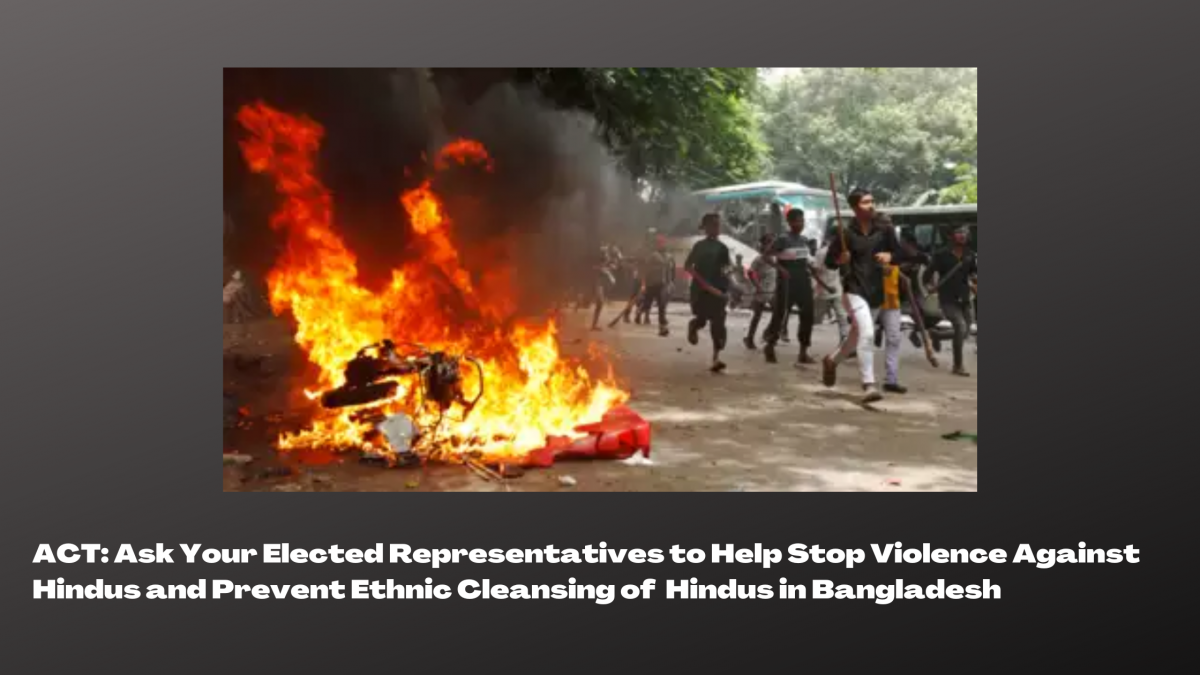
  • ACT: Ask Your Elected Representatives Help Prevent Ethnic Cleansing of Bangladesh Hindus

    ACT: Ask Your Elected Representatives Help Prevent Ethnic Cleansing of Bangladesh Hindus

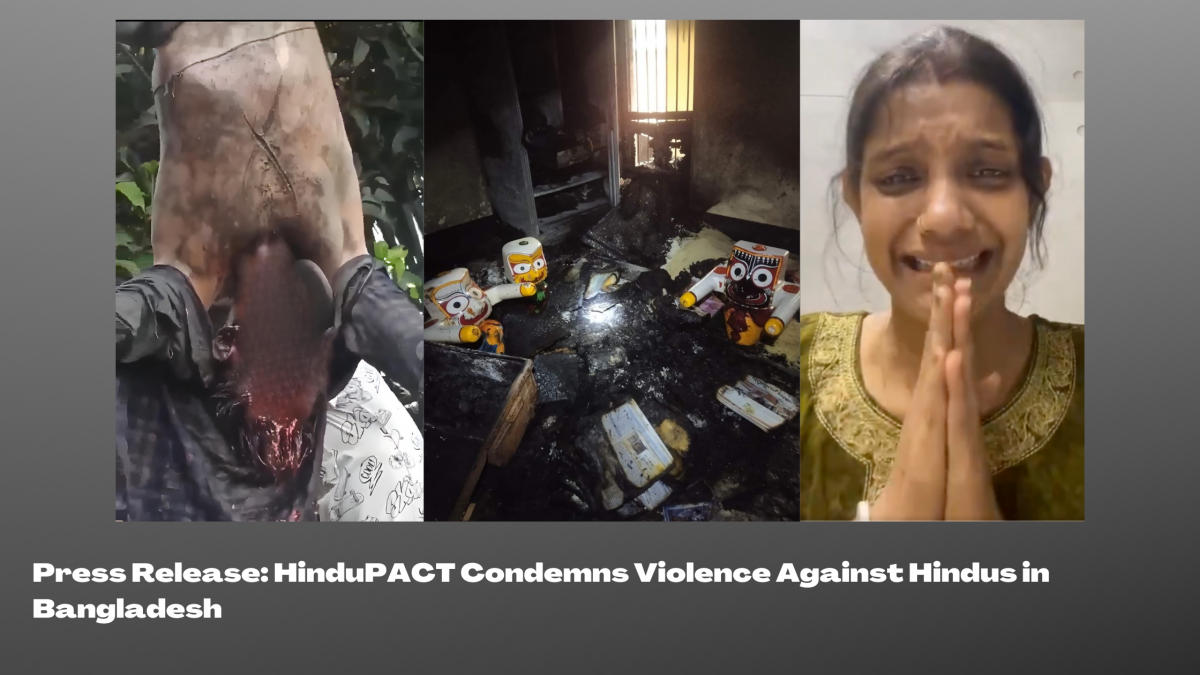
  • Press Release: HinduPACT Condemns Violence Against Hindus in Bangladesh

    Press Release: HinduPACT Condemns Violence Against Hindus in Bangladesh

    August 5, 2024

     HinduPACT vehemently condemns the recent spate of violence against the Hindu community in Bangladesh, culminating in the brutal murder of two councilors and the vandalization of the sacred Kali temple and ISKCON temple during anti-government protests.

    This appalling act is not just an attack on individuals but a direct assault on the Hindu community for their pluralistic beliefs.  We stand in solidarity with the Hindu community in Bangladesh and demand immediate action from the Bangladeshi government to bring the perpetrators to justice and ensure the safety and security of all its citizens, irrespective of their religious beliefs.

    The international community must also take note of these heinous crimes and support measures to protect religious minorities worldwide. We call upon human rights organizations and governments around the globe to condemn these acts and work towards safeguarding the rights of all minority communities.

    Deepti Mahajan, co-convenor of HinduPACT, said:

    With the coup in Bangladesh, the 10 million Hindus are sitting on a ticking bomb of genocide. Reports are coming in from inside Bangladesh of unimaginable torture, killings, and burning of Hindi temples. This instability in the region is extremely dangerous for democracies like India and an inevitable threat to the Hindus in Pakistan as well. We need the eyes and ears of all Western countries at this instability in Asia and demand the safety of the minorities in Bangladesh.

    Ajay Shah, President of VHPA and co-Convenor of HinduPACT commented:

    This incident is a grim reminder of the atrocities committed against Hindus during the 1971 genocide, where an estimated 3,000,000 Hindus were brutally killed. The echoes of such historical horrors underscore the urgent need for vigilance and protection of religious minorities.

    HinduPACT remains committed to advocating for the rights and safety of Hindus globally and will continue to work tirelessly to ensure justice is served in this grievous matter.

  • Press Release: Toronto District School Board Must Reject Proposed Addition of ‘Caste’ to its Anti-Discriminatory Policy

    Press Release: Toronto District School Board Must Reject Proposed Addition of ‘Caste’ to its Anti-Discriminatory Policy


    FOR IMMEDIATE RELEASE

    March 6, 2023


    WASHINGTON, D.C – HinduPACT implores the Toronto District School Board (TDSB) to reject a motion to add “Caste” to its anti-discriminatory policy. On March 8th, as Hindus around the world celebrate Holi – the biggest festival in Hinduism – the TDSB is set to vote on this discriminatory motion. 

    This proposed legislation sets a dangerous precedent for Hindus everywhere, and it follows a recent racist Caste ordinance that was passed by the Seattle City Council on February 21st that includes “caste” as a specific category as prejudice. This is a direct violation of the First Amendment’s Establishment Clause. While Seattle’s Caste ordinance is perilous, Wednesday’s vote in Toronto is even more dangerous because it is not just a resolution but an actual piece of legislation.

    Ajay Shah, Convenor of HinduPACT, 

    HinduPACT believes that the addition of “Caste” to the anti-discriminatory policy will lead to the further stigmatization of the Hindu diaspora and communities throughout North America and the perpetuation of stereotypes that are both false and harmful. 


    Tejal Shah, Convenor of the Hindu Mandir Executives’ Conference (HMEC) and Jt. General Secretary of the World Hindu Council of America (VHPA),

    Recent vandalism of Hindu temples in North America, and the caste resolutions such as these further an agenda of Hinduphobia.  Toronto Districe School Board has an opportunity to reject this caste motion and take a stand against discrimination and violence against Hindus 

    It is crucial to note that “Caste” is a colonial construct that was imposed upon Hindus by the British during their colonial rule over India. The word “caste” traces its lineage to Portuguese and Spanish and was invented and used as a tool of racial discrimination against converted Jews and to maintain racial and genetic purity of Spanish and Portuguese Christians. There is no reference to the concept of “caste” in any of the religious or philosophical teachings that originated from the Indian subcontinent.

    HinduPACT urges the TDSB to reject this motion and to uphold the principles of equality and justice for all. We call upon all Hindus and allies to stand with us in opposition to this harmful legislation.

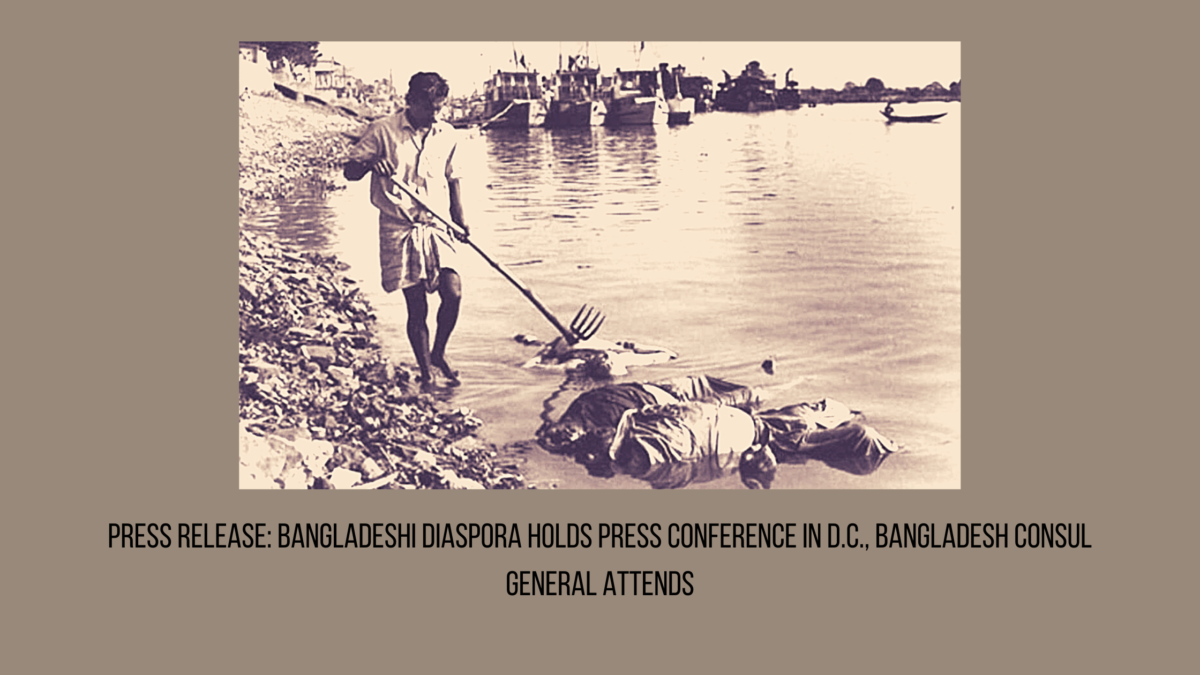
  • Press Release: Bangladeshi Diaspora Holds Press Conference in D.C., Bangladesh Consul General Attends

    Press Release: Bangladeshi Diaspora Holds Press Conference in D.C., Bangladesh Consul General Attends

    FOR IMMEDIATE RELEASE                                         PRESS CONTACT

    October 29, 2022                                                           info@HinduPACT.org

    Bangladeshi Diaspora Holds Press Conference in D.C., Bangladesh Consul General Attends

    H.Res. 1430 calls for Action Under International Law Against Pakistan Armed Forces and War Criminals

    Washington, D.C. – On Friday, The Human Rights Congress for Bangladesh Minorities (HRCBM) and HinduPACT held a press conference at the National Press Club which was attended by members of the media, human rights activists, academics, entrepreneurs, members of the Bangladeshi diaspora community and Bangladesh’s consul general to Florida, to discuss the recent introduction of the bipartisan H.Res. 1430 by Congressman Steve Chabot, Ranking Member of the House Foreign Affairs Committee’s Subcommittee on Asia and the Pacific, and Co-Chair of the Bangladesh Caucus and co-sponsored by Congressman Ro Khanna (D-CA) and Congresswoman Katie Porter (D-CA).  

    In 1971, the Pakistani army and its allies brutally raped more than 200,000 women and girls and slaughtered approximately 3 million people. Ten million people were displaced and had to seek asylum in neighboring India. The Pakistani military and its allies also carried out the targeted assassination of more than 1,100 Bengali intellectuals and professionals, including journalists, professors, physicians, attorneys, and writers, in order to create an intellectual vacuum in the country. In Bangladesh, 1,942 mass graves were discovered. 

    The Bangladesh government started to prosecute war criminals who collaborated with the Pakistan army and the Government of Bangladesh formed the International Crimes Tribunal of Bangladesh. Since then, it has tried 49 war criminals. More than 500 instances are currently under investigation, while 36 cases are ongoing in court.

    Speakers discussed and answered questions about the impact of this historic resolution on the geopolitics of the Indo-Pacific and on radical groups originating from Bangladesh and Pakistan. 

    Dr. Sachi G. Dastidar, distinguished professor emeritus at SUNY, recalled his family’s personal experience as victims of genocide and destitution. 

    Dwijen Bhattacharjya, a lecturer at Columbia University and General Secretary of the Bangladeshi Hindu Buddhist Christian Unity Council in the United States, complimented both Congressmen for presenting this resolution and departing from the 1971 United States policy on the genocide in Bangladesh.

    Mr. S.M. Alam, Consul General of Bangladesh at the Miami consulate, thanked Congressman Steve Chabote and Congressman Ro Khanna for introducing this resolution and invited the Bangladeshi community to engage with additional congressmen to pass it. He urged community leaders to unite as Bangladeshis to bring out the best outcome for this historic effort.

    Saleem Samad, Gen. Sec. of the Forum for Freedom of Expression and who also serves as the Bangladesh Correspondent for Reporters sans Frontieres, asserted that the Pakistani Army and radical islamists from Jamaat-e-Islami, Al-Badr, Al-Sams, and Rajaker employed rape as a method of war and ultimately extermination. He decried this horrible crime against humanity and urged everyone to recruit additional co-sponsors for the resolution. He recalled that the Pakistani military and their Bangladeshi collaborators did not target Christians and Buddhists in the same manner as they did Hindus.

    President of ISPAD and community leader Dilip Debnath expressed appreciation to the two lawmakers for proposing this resolution in the United States Congress. He urged community members to take action to adopt this Resolution. 

    Razzak Baloch, Organizer, Baloch Human Rights, condemned the Pakistani Army for its genocide in Bangladesh in 1971. He said that the failure of the global community to hold the Pakistan Army accountable after 1971, led to violence against Baloch communities that continues even today. 

    Mr. Munawar “Sufi” Laghari, the Executive Director of Sindhi Foundation, echoed Razzak’s views and promised to work with the Bangladeshi community to get the resolution passed. 

    The press conference was moderated by Adelle Nazarian, Media Fellow at the Gold Institute for International Strategy (GIIS) and Communication and Legislative Director at HinduPACT. She expressed appreciation for the participants’ insightful comments and urged all humanitarians, and the Bangladeshi diaspora in the United States in particular, to work with their local representatives and requested that they support the resolution. Additionally, she requested all journalists to cover this resolution as she understands the importance of the media following her own successful career in broadcast and online journalism.

    For additional information and media inquiries, please contact info@HRCBM.org

  • Press Release: Historic Bi-Partisan Resolution Recognizing 1971 Bangladesh Genocide Introduced on Capitol Hill

    Press Release: Historic Bi-Partisan Resolution Recognizing 1971 Bangladesh Genocide Introduced on Capitol Hill

    FOR IMMEDIATE RELEASE       

    October 15, 2022                                                              

    WASHINGTON, D.C –

    October 14, 2022 will be remembered as a historic day.  On this day the bipartisan H. Res. 1430, seeking formal recognition of of the 1971 Bangladesh genocide, was introduced by Congressional representatives, Steve Chabot and Ro Khanna. For more than a year, the Ohio chapter of HinduPACT led the campaign with the support of members of the Bangladeshi community from across the US.

    The resolution calls for punishment under international law, against war criminals in the Pakistan Army and their allied Islamists, who were responsible for the murder of 3 million people in East Pakistan (now Bangladesh) over the course of 9 months.  An overwhelming majority of the victims were Hindus as they were specifically targeted for extermination.

    Renu Gupta, HinduPACT’s chapter Lead in Cincinnati, said,

    “Today, Cincinnati has made history. Congressman Steve Chabot has been kind enough to understand our concerns and taking up the resolution to recognize Pakistan’s crimes in 1971 as genocide. I thank our friend, Deputy Mayor of Blue Ash, Pramod Jhaveri, for sensitizing Congressman Chabot about the issue. I want to thank all the volunteers in Cincinnati for making it possible.”

    Amulya Tyagi, a HinduPACT member from Cincinnati, said,

    “From the bottom of our heart we thank Congressman Steve Chabot for showing the conviction and courage to introduce this resolution. A special mention must be made of the Congressman’s Foreign Policy Advisor, Mark Erste, for leading this effort and working with the HinduPACT team in bringing HR 1430 to reality. Mark’s team also worked with Congressman Ro Khanna’s staff resulting in the Congressman co-sponsoring the resolution. We sincerely thank Congressman Ro Khanna and his staff for this.”

    Vinod Sudhakar, President of the Hindu Temple of Greater Cincinnati, said,

    “As a Cincinnatian, I am extremely proud of Congressman Steve Chabot for showing great courage and resolve in recognizing the state sponsored massacre of millions in East Pakistan (now Bangladesh) in 1971 as a genocide.  On behalf of the Hindus in Cincinnati and every person that cares for and values human life we applaud Congressman Chabot for setting an example for all political leaders in this country to choose justice and resolute action versus political convenience and inaction.”

    Ajay Shah, Convenor of HinduPACT, said,

    “Hindus have suffered countless genocides over past 1000 years.  The world has ignored these genocides and textbooks have remained silent. We thank Rep. Chabot and Rep. Khanna for  proposing this resolution. We hope that this resolution passes unanimously.”

    About HinduPACT

    HinduPACT brings Hindu ethos and values of unity in diversity, plurality, compassion and mutual respect amongst religions to policy and advocacy for human rights, environmental protection, racial and gender equality. HinduPACT activities include hinduvote.org

  • ACT: Ask your Representative to Co-Sponsor H.Res. 1430 to Recognize 1971 Bangladesh Genocide

    ACT: Ask your Representative to Co-Sponsor H.Res. 1430 to Recognize 1971 Bangladesh Genocide

  • Press Release: BAPS Toronto Mandir Vandalism: HinduPACT Calls for Authorities to Stop Pakistan-Backed Khalistani Targeting of Hindus Across North America

    Press Release: BAPS Toronto Mandir Vandalism: HinduPACT Calls for Authorities to Stop Pakistan-Backed Khalistani Targeting of Hindus Across North America

    FOR IMMEDIATE RELEASE

    September 16, 2022

    WASHINGTON, D.C – A series of strategically targeted attacks against Hindus across North America, several of which were carried out by Pakistan-backed Khalistani extremists, is raising questions about whether enough is being done to address the alarming rise in anti-Hindu attacks by law enforcement. 

    On Wednesday evening, Khalistani extremists vandalized and defaced the BAPS Shri Swaminarayan Mandir in Toronto spray painting saffron-colored profanities on the temple’s entrance including “Hindustan murdabad” which translates to “death to India” and “Khalistan zindabad” which translates to “long live Khalistan.” Khalistan is a made up name for a non-existent nation idealized by Pakistani-backed Sikh obscurantists who wish to separate a part of Northern India into a nation by that name. It is important to note that the Khalistani narrative finds little to no support among Sikhs in India and elsewhere.

    This incident follows a similar one last month where a Khalistani nationalist began berating a Hindu man in a California Taco Bell based on his dietary preferences and his choice of attire. 

    Tejal Shah, Director of the VHPA’s Hindu Mandir Executive Conference (HMEC), said

    “HMEC strongly condemns the defacing and vandalization of the BAPS mandir or any mandir. This is a shameful act of Hinduphobia, a hate crime and blatantly anti-India activity. We are looking for full scrutiny and strict actions from the government of Canada and Prime Minister Justin Trudeau in addressing this unacceptable crime. This weekend, leaders of dozens of Hindu mandirs are gathering in Cincinnati, OH to discuss the safety and security of Hindu temples in North America and how mandirs can actively engage the local communities and law enforcement to provide enhanced security to mandirs and prevent such attacks in future.”

    The Hudson Institute recently published a study on Kashmir and Khalistani movements in the United States titled, “Pakistan’s Destabilization Playbook: Khalistan Separatist Activism Within the US.”

    Highlighting the Hudson Institute study, HinduPACT’s Executive Director Utsav Chakrabarti said,

    “This hate campaign is similar to the kind of hate that emerged in Khalistanis in the early 80s. It took very little time for the Khalistanis to go from hate speech to terrorist attacks. One such attack in 1985 led to the murder of 351 innocent people, the largest terror attack in Canadian history. It is important that the Justice Department and anti-terror agencies in Canada and the US realize this,” he added.

    Ajay Shah, President of World Hindu Council of America and Convenor of HinduPACT while codeming this attack on the Hindu Mandir said,

    “This incident comes just a few weeks after the vandalism at the Mandir in Queens, NY where a statue of Gandhi was twice vandalized. We strongly believe that these increased incidents of vandalism are directly correlated with the vitriol unleashed by Hindu-hating groups such as Hindus for Human Rights that have specifically targeted BAPS. It is disappointing to see that in addition to increased attacks on Mandirs, systemic Hinduphobia is growing in every sphere of North American Hindu life and is well documented.” Shah further added, “In Canada, we have seen the Prime Minister denigrate the sacred Hindu symbol the Swastika, giving Hindu haters more ammunitIon to attack them. On the other side of the border, in America, President Joe Biden and the White House failed to invite even one Hindu representative to their interfaith meeting titled “United We Stand” which was held on September 15.”


  • Press Release: HinduPACT Commends Bravery of US Military Mom for Confronting Pakistan Ambassador Over Violations Against Religious Minority Women

    Press Release: HinduPACT Commends Bravery of US Military Mom for Confronting Pakistan Ambassador Over Violations Against Religious Minority Women

    Press Release: HinduPACT Commends Bravery of US Military Mom for Confronting Pakistan Ambassador Over Violations Against Religious Minority Women

    FOR IMMEDIATE RELEASE

    September 9, 2022

    WASHINGTON, D.C – On Friday, former Congressional candidate Manga Anantmula, the mother of US Navy commander, confronted Pakistani Ambassador Masood Khan during a Q&A sessions at the National Press Club and requested he address the issue of forced conversions and the rape of hundreds of women who identify as religious minorities in the Islamic Republic of Pakistan.

    “Manga’s bravery today deserves praise and recognition,” said Deepti Mahajan, CHINGARI Project Lead. “She stood up and presented a voice for the voiceless girls and women who are forcibly converted to Islam in Pakistan and married off to much older men without having a say in the matter.”

    HinduPACT Executive Director Utsav Chakrabarti added:

    “The Biden administration needs to address the issue of discrimination against religious minorities in Pakistan and the continued corruption in their armed forces before they provide any further military and economic assistance to Pakistan’s leadership.”

    Ambassador Khan’s appearance at the National Press Club was focused on fundraising and relief efforts for the flood-ridden country which has affected 33 million people. The US government has already pledged $300 million in relief to Pakistan to help offset the damages the nation has sustained as a result of what is seen as the worst flooding in the nation’s recent history.

    Commenting on Ambassador Khan’s request for American and International aid for floods, Ajay Shah, President of World Hindu Council of America and Convenor of HinduPACT said:

    “As Americans, we have a right to demand that any American aid be tied to the protection of minority girls and women from systematic state-sponsored brutality.” Shah added, “For the Hindu minority, and especially Hindu women, there is an ominous added dimension to the crisis. There are reports of Hindu girls lured for food and gang raped. Reports suggest that an eight-year-old girl was raped and her eyes gouged out in the Sindh province of Pakistan.”

    Despite Ambassador Khan’s consistent attempts to blame damage caused by the flooding on climate change, the true issue is Pakistan’s poorly maintained infrastructure and reckless defense spending. Pakistan remains one of the most corrupt, militarized, and poorly sustained countries in the developing world.