Category: CHINGARI

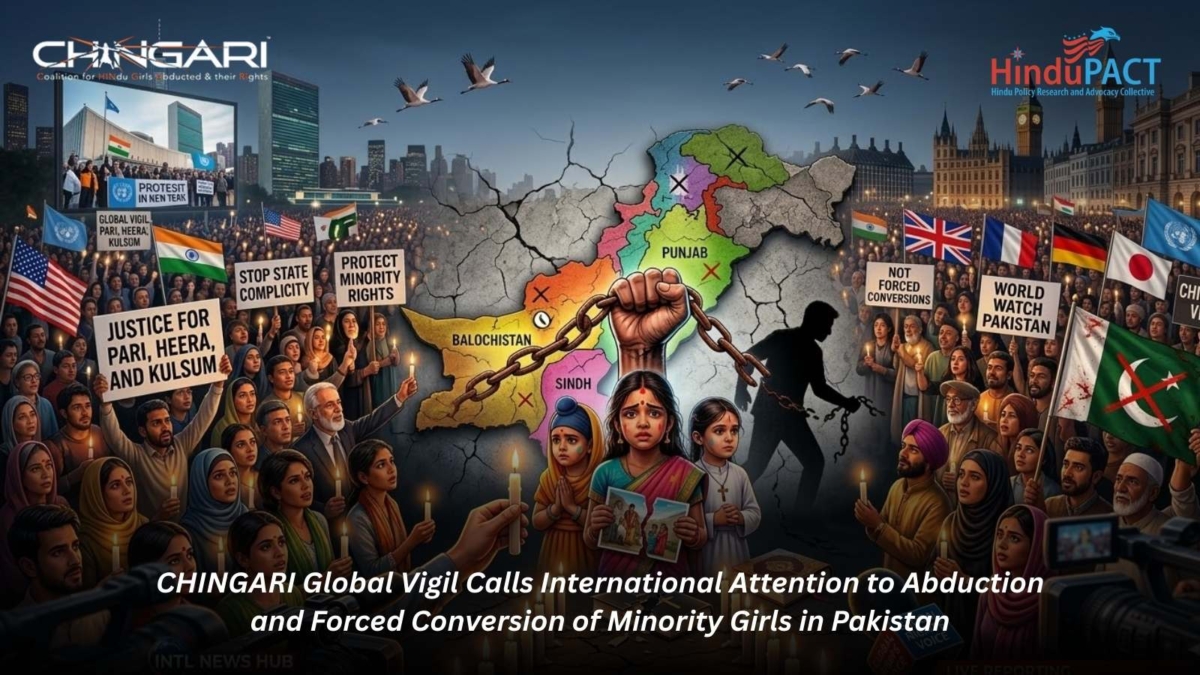
  • CHINGARI Global Vigil 2025

    CHINGARI Global Vigil 2025

    CHINGARI: A Flame for the Forgotten Daughters of Pakistan

    In the quiet towns and dusty villages of Sindh, Pakistan, a tragedy unfolds with chilling regularity. Every year, according to the Pakistan Human Rights Commission, an estimated one thousand minor girls from Hindu, Sikh, and Christian communities are kidnapped, assaulted, forcibly converted, and coerced into marriages with men often decades older. For these girls, childhood ends abruptly. Dreams, education, safety, and family ties are shattered in a single moment of violence.

    HinduPACT’s CHINGARI Project (Coalition for Hindu Girls Abducted and their Rights) exists because these girls are rarely seen, rarely named and rarely defended in global human rights discourse. Their cries do not cross borders. Their stories seldom appear in headlines. Their families, often economically disadvantaged and politically marginalized, lack the support needed to seek justice in a legal system where police inaction and religious-political pressure can overwhelm the most basic rights.

    On chingari.org, the organization documents case after case: young girls dragged from their homes, snatched from markets, lured and abducted during school routes, or taken at gunpoint in front of their families. A seven-year-old child named Priya Kumari disappeared while serving sherbet with her father. A fourteen-year-old, Parisha Kumari, was reportedly beaten, abducted, and converted; her parents filed official complaints, yet no recovery followed. One heart-wrenching video shared on the CHINGARI Project’s social media recounts the shooting death of an eighteen-year-old girl, Pooja Kumari, murdered after resisting abduction in the Sukkur district. Her refusal to accept a forced conversion and marriage cost her life.

    These are not isolated incidents. They are part of a documented, long-term pattern observed across regions of Sindh and beyond. Families who attempt to recover their daughters often face intimidation. Minority parents seeking justice must navigate a system where they may be pressured to accept conversion certificates their daughters never willingly signed, or marriage documents issued by local clerics with deep political connections. In many cases, girls are not even brought to court, or they are produced only after months of “conversion instruction,” leaving them too terrified to speak freely. Poverty, fear, social stigma, and political apathy converge to create a perfect storm in which perpetrators act with near total impunity.

    CHINGARI was founded by HinduPACT (Hindu Policy Research and Advocacy Collective) to address this crisis. It serves as both a documentation initiative and an advocacy movement. Its mission is to bring international attention to the plight of abducted Hindu girls and to push for systemic change. Through case tracking, survivor support, legislative engagement, and global awareness events, CHINGARI aims to turn silence into moral pressure and indifference into collective action.

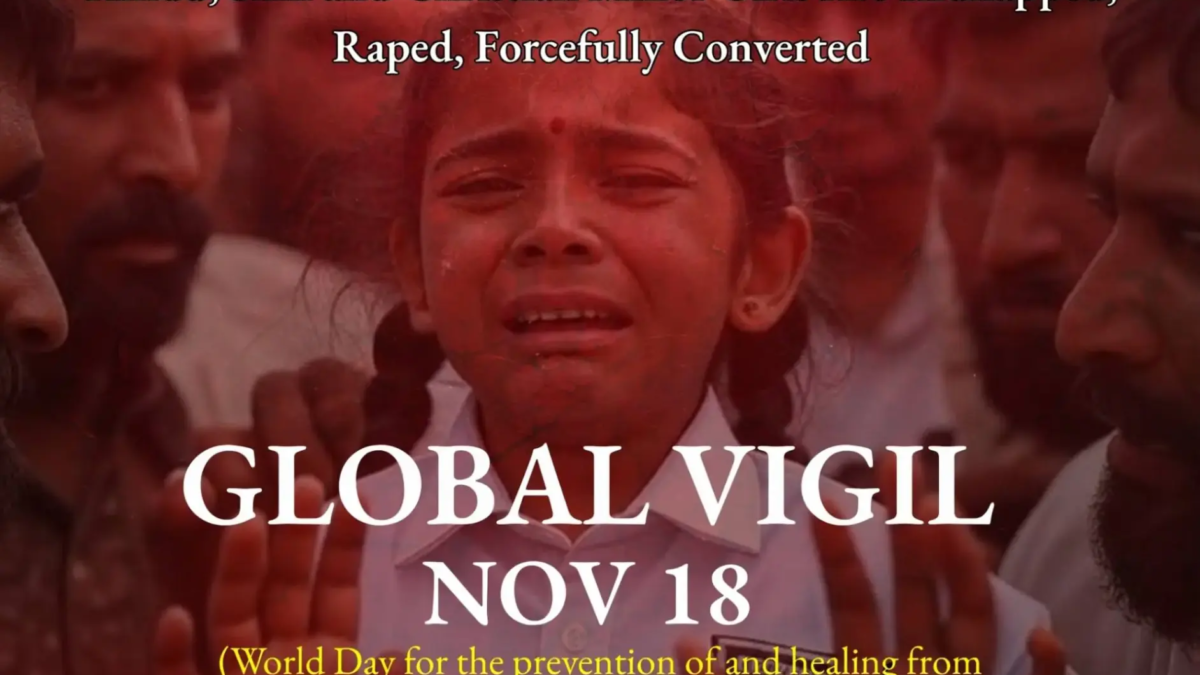
    One of its main tools for raising awareness is the annual CHINGARI Global Vigil. Held on November 18, the United Nations’ World Day for the Prevention of and Healing from Child Sexual Exploitation, Abuse, and Violence, the vigil unites diaspora communities and allies in solidarity with victims. This year’s Global Vigil is a joint initiative between HinduPACT, Insight UK, and Optics Australia.  During this online vigil, participants share the names and stories of missing girls, and urge governments, human rights organizations, and global media to recognize the crisis and take decisive action.  The intention is clear: these children must no longer be invisible.

    The abuse endured by these girls is not simply a cultural issue or a local criminal matter. It is a violation of fundamental human rights. It intersects with child protection, gender-based violence, religious freedom, minority rights, and international law. It belongs in the same conversations as advocacy against forced marriage, human trafficking, sexual slavery, and religious persecution.

    For CHINGARI, the central message is that global civil society cannot selectively engage with human rights. The suffering of minority girls in Pakistan deserves the same urgency that international organizations devote to other vulnerable groups.

    The stories catalogued by the CHINGARI Project challenge the world to confront uncomfortable truths. They challenge human rights organizations to revisit overlooked regions. They challenge lawmakers to use their platforms to insist on accountability. They challenge women’s rights advocates to recognize that some of the world’s most brutal gender-based crimes occur in places that rarely appear in Western policy frameworks. And they challenge media professionals to expand their lens and report on cases that communities on the ground have been documenting for decades.

    The call to action is clear and multifaceted. Global human rights bodies such as Amnesty International, Human Rights Watch, UNICEF, UN Women, and the Office of the High Commissioner for Human Rights are urged to acknowledge and document the crisis. Women’s rights organizations worldwide are encouraged to include the plight of these girls in their advocacy frameworks. International agencies focused on child protection and gender-based violence must undertake independent assessments and press for reform. Lawmakers in democratic nations are asked to raise the issue in parliaments, issue public statements, hold hearings, and engage with Pakistani authorities through diplomatic channels.

    International pressure matters. Every government has a responsibility to protect the most vulnerable. When the world turns its attention to injustice, the cost of committing abuse increases. Perpetrators begin to hesitate. Local authorities begin to fear reputational consequences. Reform, however slow, becomes possible.

    It is equally important for global citizens to act. Individuals can share CHINGARI’s documented cases, participate in vigils, write to lawmakers, support survivor-forward campaigns, donate to the CHINGARI initiative, and amplify the voices of those working on the ground.

    CHINGARI reminds the world that behind every statistic is a daughter whose life was full of promise. A girl who once sat in a classroom, laughed with friends, helped her mother prepare meals, walked barefoot through her village, dreamed of becoming a teacher or doctor, and trusted the world around her. A girl who was taken before she had a chance to grow.

    Her story is not finished. It is waiting for the world to listen.

    The time to act is now.

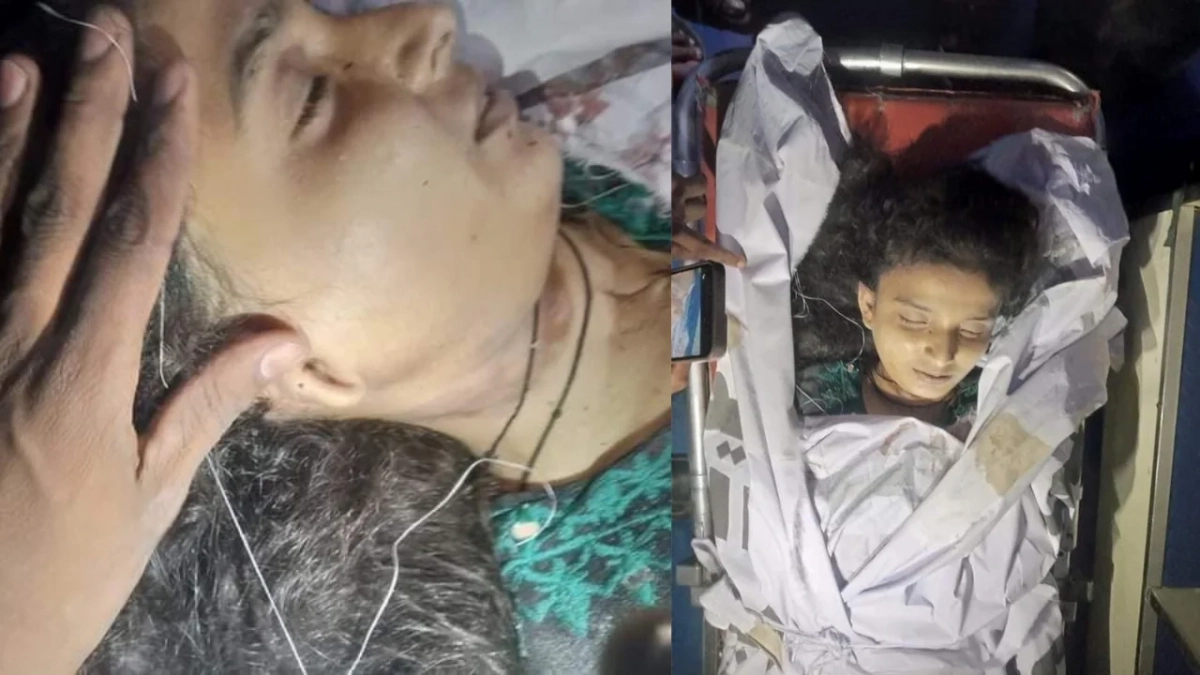
  • A young Hindu girl’s, raped and brutally murdered body

    A young Hindu girl’s, raped and brutally murdered body

    A young Hindu girl’s, raped and brutally murdered body, was found in a doctor’s house in Pakistan….educated or non educated the Muslim men in Pakistan think its their duty and privilege to violate minority girls.

    #SanctionPakistan #saveourgirls

    @INSIGHTUK2 @StateDept @HouseForeign @UNChildRights1 @UN_Women @AmyMek @BarackObama @CLARITyCoaltion @YasMohammedxx @WorldBank @USAID @SamanthaJPower @IMFNews

  • 13 year old girl, Bago Kolhi, was abducted forcefully on gunpoint

    13 year old girl, Bago Kolhi, was abducted forcefully on gunpoint

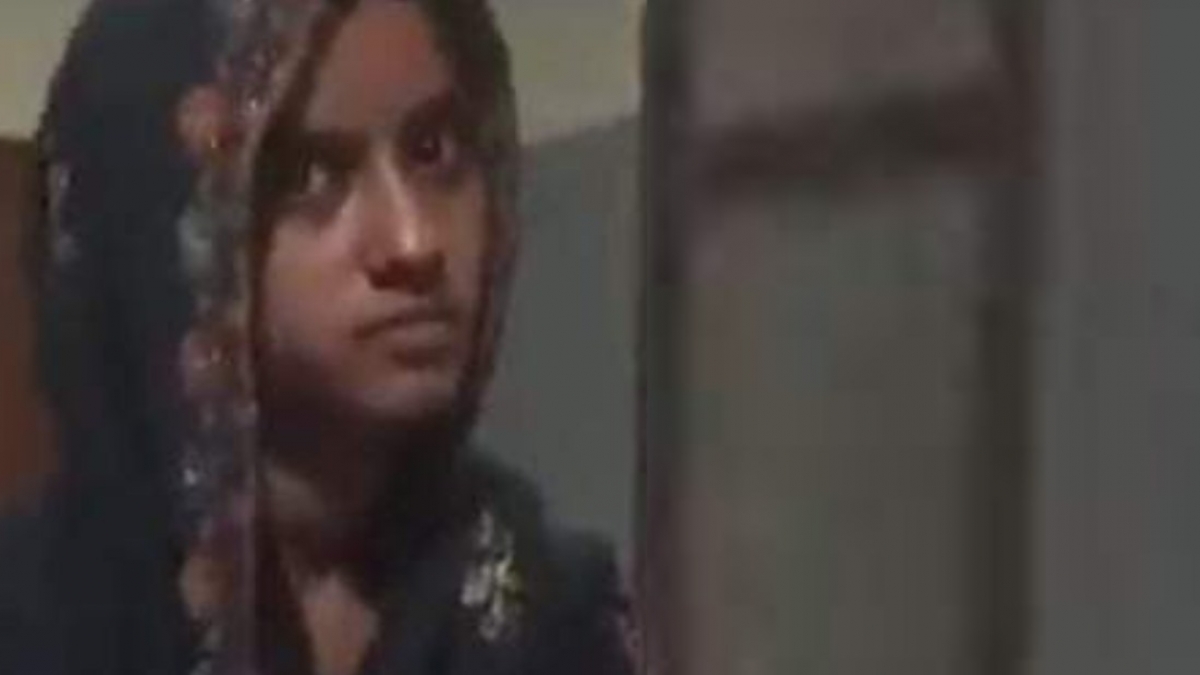
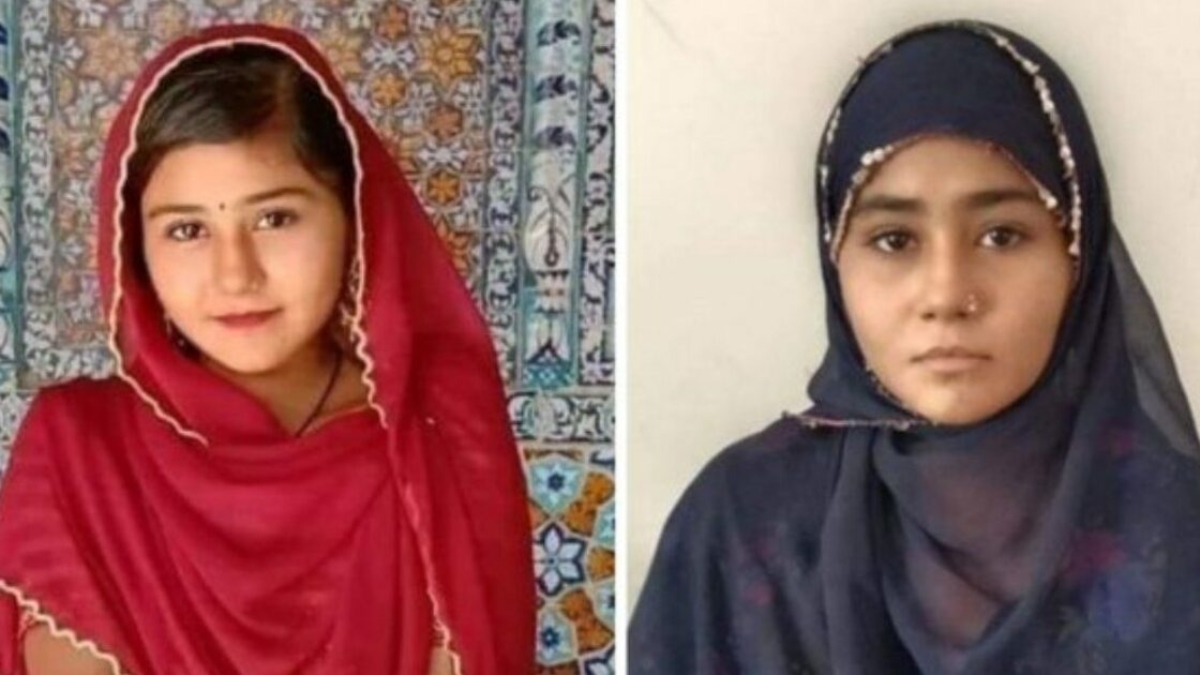
    These hollow, questioning eyes should put a hole in your heart….we are failing these little girls…this 13 year old girl, Bago Kolhi, was abducted forcefully on gunpoint 5 days ago by Abid Ali and friends from her home and brought to Sufi Shrine of Pir Aga Jan Sharhandi, Samaro where she was converted and married to her abductor Abid Ali, in Sindh, Pakistan. The parents have been trying to complaint about this incident but police has not registered any report.

    #SanctionPakistan #saveourgirls

    @INSIGHTUK2 @StateDept @HouseForeign @UNChildRights1 @UN_Women @AmyMek @BarackObama @CLARITyCoaltion @YasMohammedxx @WorldBank @USAID @SamanthaJPower @IMFNews

    https://twitter.com/chingariproject/status/1790733486174957892/video/2
  • Pakistan criticized for failing to protect minorities

    Pakistan criticized for failing to protect minorities

    Some 193 violent incidents took place against religious minorities last year, think-tank says

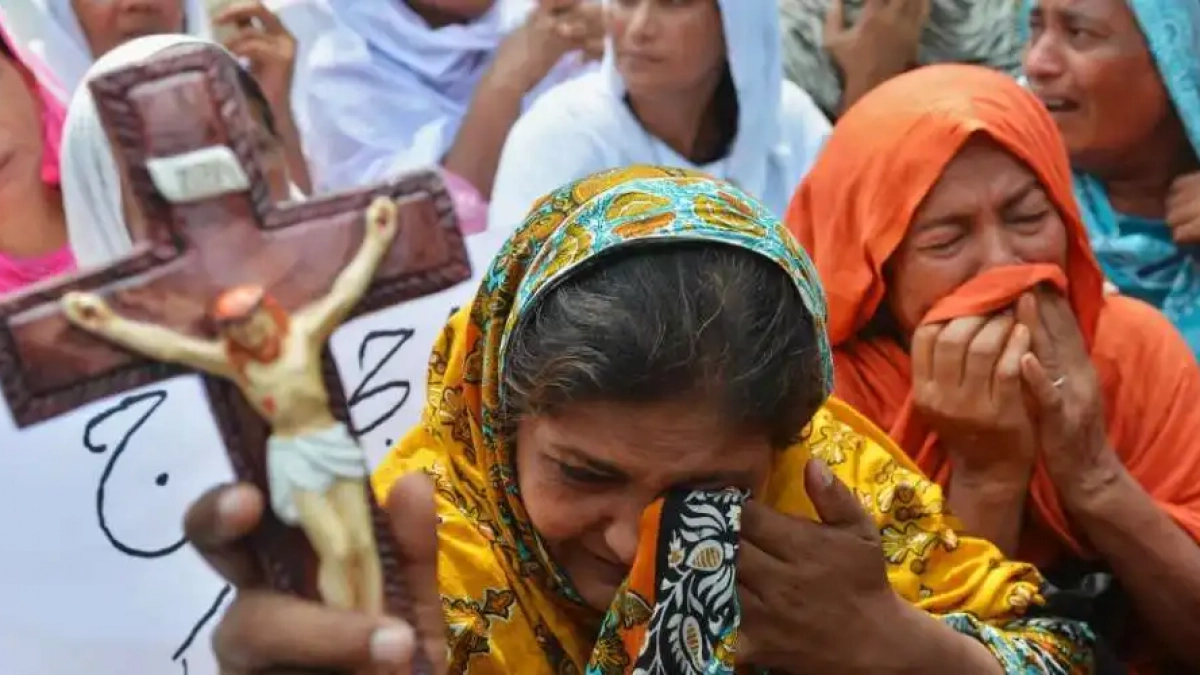
    Pakistani women weep as Christians protest in this file photo against the suicide bombing at All Saints church in the northwestern city of Peshawar on Sept 23, 2013 that left 81 people dead. The latest human rights report from the US State Department says Pakistan has seen no improvement on human rights, especially on rights of minorities.

    Pakistan has come under fire for dismal human rights violations, especially for failing to protect minority rights and curbing attacks on religious minorities in the latest human rights report from the US State Department.

    The 2023 Country Reports on Human Rights Practices, released on April 23, covers internationally recognized individual, civil, political, and worker rights, as set forth in the Universal Declaration of Human Rights and other international agreements. 

    The report says there was no significant changes in the human rights situation in Pakistan last year.

    Violence against religious minorities continued in Pakistan in 2023 including forced conversions, early and forced marriages and mob attacks targeting minorities, it said.

    Pakistan is home to about 241 million people, 96.3 percent of whom are Muslims, 1.6 percent are Hindus, and 1.6 percent are Christians. Other religious minorities such as Sikhs, Buddhists and Zoroastrians make up less than one percent, according to the US Commission on International Religious Freedom. 

    Civil society and human rights groups reported increasing violence against minorities in the country.

    A total of 193 incidents of violence took place against religious minorities in Pakistan last year, according to Islamabad-based Center for Research and Security Studies (CRSS).

    Of these, Christians were targeted in 113 incidents, 42 cases of violence against Ahmadis, a Muslim sect considered heretics by Islamic hardliners, 37 cases of violence against Hindus and one incident against Sikhs, the CRSS said in its annual report.

    The CRSS reported that 35 people, mostly minorities, were killed in sectarian attacks last year, compared to 19 deaths in 2022.

    The US human rights report, referring to Pakistani civil society groups, said that the nation’s courts often failed to protect the rights of religious minorities against Muslims who accused them of violating country’s stringent blasphemy laws.

    Pakistan’s penal code punishes defamation of Islam and Prophet Mohammad with life and death sentences.

    “While the majority of those imprisoned for blasphemy were Muslim, religious minorities were disproportionately affected,” the US report said. 

    “Lower courts often failed to adhere to basic evidentiary standards in blasphemy cases, which civil society groups and lawyers ascribed to fear of retaliation from religious groups if they acquitted blasphemy defendants.” 

    The report also highlighted that forced religious conversions and enforcement of blasphemy laws were particular areas of concern for religious minorities. 

    “Societal violence due to religious intolerance remained a serious problem,” it said. “There were occasional reports of mob violence against religious minorities, including Christians, Ahmadi Muslims, and Hindus.”

    Zohra Yusuf, a rights activist, journalist and former chairperson of the Human Rights Commission of Pakistan (HRCP), agreed there had not been any “substantial improvement” in the rights situation of minorities. 

    “The most affected are the Ahmadi community,” Yusuf told UCA News. “Their places of worship and their graveyards are attacked. They are definitely the most persecuted community in Pakistan.”

    She said Hindus were the most affected by forced conversions in Pakistan’s Sindh province, adding that girls are being kidnapped in the province and forced to convert to Islam and then married to Muslim men. 

    “When they seek help from the courts, it becomes an issue on whether the girl is an adult or not,” she said. “And even if they do get justice from the courts, it is not easy to recover from the ordeal they go through.” 

    Nasir William, a member of advocacy group, Center for Social Justice, which promotes social justice for marginalized groups, echoed similar sentiments.

    “It is because of a mindset that we have harbored that such incidents happen,” William told UCA News.

    Things can improve only when people are properly educated on human rights and this becomes a subject in the school curriculum, so children can learn it from a young age, he said.

    He said such initiatives would educate future generations to promote inclusivity, and urged authorities to cut out “hate material” in the curriculum taught by educational institutions. 

    US-based Christian rights group, Open Doors, ranks Pakistan 7th among 50 nations worldwide where Christians face high levels of persecution.

  • UN experts condemn forced marriages, religious conversions of minorities in Pakistan

    UN experts condemn forced marriages, religious conversions of minorities in Pakistan

    Women and children in Pakistan’s religious minority communities are vulnerable to forced religious conversion and marriage, as well as sexual assault and trafficking, UN experts said on Thursday. The statement also urged Pakistani authorities to treat all women, including those from the “Hindu and Christian” communities, equally.

    NEW DELHI: Women and children in Pakistan belonging to religious minority communities are vulnerable to forced religious conversion and marriage, sexual violence and trafficking, the UN experts said on Thursday.

    The statement further called upon the Pakistani authorities to treat women including those belonging to “Hindu and Christian” communities without discrimination.

    “All women and girls must be treated without discrimination, including those belonging to the Christian and Hindu communities, or indeed other religions and beliefs,” they added.
    “Christian and Hindu girls remain particularly vulnerable to forced religious conversion, abduction, trafficking, child, early and forced marriage, domestic servitude and sexual violence”, the experts said in a statement.

    “The exposure of young women and girls belonging to religious minority communities to such heinous human rights violations and the impunity of such crimes can no longer be tolerated or justified,” the statement read.

    Forced marriages, religious conversions, validated by courts

    Taking on the religious laws that justify some of these crimes, the statement said, “Perpetrators often escape accountability, with police dismissing crimes under the guise of ‘love marriages’.”

    Stressing on the importance of a woman’s right to choose, the UN experts said that child, early, and forced marriages cannot be justified on religious or cultural basis.

    “A woman’s right to choose a spouse and freely enter into marriage is central to her life, dignity and equality as a human being and must be protected and upheld by law,” the experts said.
    Highlighting that, under international law, consent is immaterial when the victim is a child under the age of 18, the experts stressed upon dissolving marriages contracted under coercion.

    ‘All women be treated without discrimination’: UN urges Pakistan

    Highlighting the case of Mishal Rasheed, a girl who was abducted, sexually assaulted and forced to marry her abductor, the UN experts called upon the Pakistani authorities to treat all women and girls without discrimination.

    The experts further urged the authorities to raise the age of marriage for girls to 18.

    “The Pakistani authorities must enact and rigorously enforce laws to ensure that marriages are contracted only with the free and full consent of the intended spouses, and that the minimum age for marriage is raised to 18, including for girls,” they said.

  • UN experts alarmed by lack of protection for minority girls from forced marriages, conversions

    UN experts alarmed by lack of protection for minority girls from forced marriages, conversions

    United Nations (UN) human rights experts have expressed dismay at the lack of protection for women and girls belonging to minority communities in Pakistan, saying that they remained vulnerable to forced marriages and conversions.

    “Christian and Hindu girls remain particularly vulnerable to forced religious conversion, abduction, trafficking, child, early and forced marriage, domestic servitude and sexual violence,” the experts said in a statement issued in Geneva on Thursday.

    The experts included special rapporteur on contemporary forms of slavery, including its causes and consequences, Tomoya Obokata; special rapporteur on trafficking in persons, especially women and children, Siobhan Mullally; special rapporteur on minority issues, Nicolas Levrat; special rapporteur on freedom of religion or belief, Nazila Ghanea.

    The chair of the working group on discrimination against women and girls, Dorothy Estrada Tanck, and members of the working group — Claudia Flores, Ivana Krstic, Haina Lu, and Laura Nyirinkindi — also joined the experts in voicing concern on the situation.

    The special rapporteurs are part of what is known as the Special Procedures of the UN Human Rights Council. Special procedures, the largest body of independent experts in the UN Human Rights system, is the general name of the Council’s independent fact-finding and monitoring mechanisms that address either specific country situations or thematic issues in all parts of the world.

    In the statement released on Thursday, the UN experts said: “The exposure of young women and girls belonging to religious minority communities to such heinous human rights violations and the impunity of such crimes can no longer be tolerated or justified.”

    They also expressed concern that forced marriages and religious conversions of girls from religious minorities were “validated by the courts, often invoking religious law to justify keeping victims with their abductors rather than allowing them to return them to their parents”.

    “Perpetrators often escape accountability, with police dismissing crimes under the guise of ‘love marriages’,” they said.

    The experts stressed that child, early and forced marriages could not be justified on religious or cultural grounds. They underscored that, under international law, consent was irrelevant when the victim was a child under the age of 18.

    In Pakistan, the legal marriage age for girls is 16 and 18 for boys.

    “A woman’s right to choose a spouse and freely enter into marriage is central to her life, dignity and equality as a human being and must be protected and upheld by law,” the experts said.

    They stressed the need for provisions to invalidate, annul or dissolve marriages contracted under duress, with due consideration for the women and girls concerned, and to ensure access to justice, remedy, protection and adequate assistance for victims.

    “Notwithstanding the right of children to freedom of thought, conscience and religion in accordance with article 14 of the Convention on the Rights of the Child, change of religion or belief in all circumstances must be free, without coercion and undue inducements,” the UN experts said.

    “The Pakistani authorities must enact and rigorously enforce laws to ensure that marriages are contracted only with the free and full consent of the intended spouses, and that the minimum age for marriage is raised to 18, including for girls,” the experts stated. adding that all “women and girls must be treated without discrimination, including those belonging to the Christian and Hindu communities”.

    They urged Pakistan to bring perpetrators to justice, enforce existing legal protections against child, early and forced marriage, abduction and trafficking of minority girls, and uphold the country’s international human rights obligations.

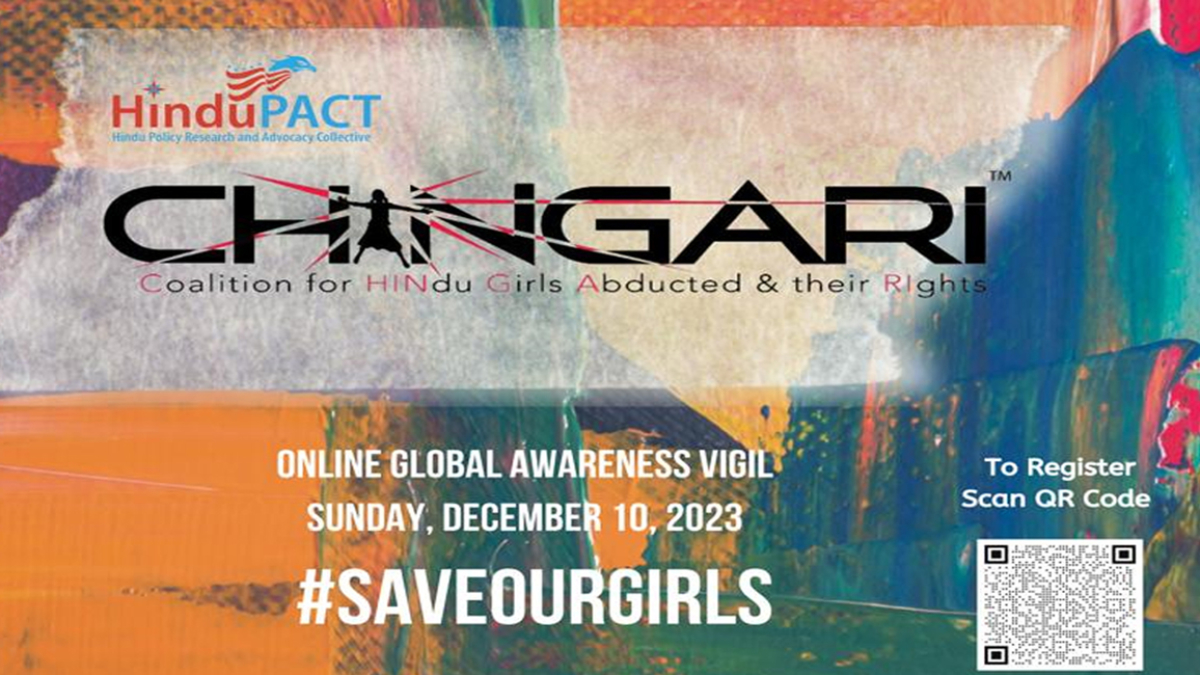
  • Online Global Awareness Vigil Sunday, December 10, 2023

    Online Global Awareness Vigil Sunday, December 10, 2023

    On December 10, 2023, the United Nations Human Rights Day, let us stand in solidarity with the countless young girls who are being subjected to unimaginable atrocities in Pakistan each year. Each year, an estimated 1000 girls are abducted, subjected to sexual violence, and forcibly converted to another faith. This equates to three girls a day who are cruelly snatched from their families and plunged into lives of pure hell. We urge you to join us in raising our voices against this abhorrent long-standing institutionalized practice of trafficking of minority girls.

    We call upon all individuals who cherish human rights to declare their unwavering support for these vulnerable girls through their social media platforms. Together, we can amplify their voices, demand justice, and bring an end to this terrible cycle of violence. On Sunday, December 10, 2023, we ask that you help contribute to positive change for these girls in one of three ways:

    posting a 30 second video saying a little prayer for the victims of this ongoing crime,
    lighting a digital candle, and/or
    sharing a message/video

    Please use these hashtags to support our cause:

    #saveourgirls #standwithourgirls #stoprape&conversion #1000littlegirls #protectpakminority #justice4pakminorities
  • Islamic War on Female Religious Minorities in Pakistan: Abductions, Forced Conversions, and Child ‘Marriages’

    Islamic War on Female Religious Minorities in Pakistan: Abductions, Forced Conversions, and Child ‘Marriages’

    Chanda Maharaj’s story serves as a tragic reminder of the continued struggle of non-Muslim minorities, particularly women and girls, for basic human rights in Islamic Pakistan.

    In August 2022, Chanda Maharaj, a 13-year-old Hindu girl, was forcibly abducted in the Fateh Chowk area of Hyderabad, Sindh, Pakistan, while on her way back home from the mill area of Fateh Chowk. According to her father Ammar and her sisters, she was taken by people riding in a white car, including Muslim Shaman Magsi, who had been regularly harassing her. A complaint was filed with the police, but no action was taken. Her distraught mother made a heart-rending appeal for her daughter’s return, but her fate remained unknown for some time. Activist group Voice of Sindh lodged an FIR with the police, but the SSP Hyderabad did not take action. It wasn’t until an international outcry that the police finally rescued Chanda.

    Chanda’s distraught mother made a heart-rending appeal for her daughter’s return, but her fate remained unknown.

    Chanda was finally recovered two months later from her Muslim abductors and had a tearful reunion with her family. It is important for people to see the fear and pain writ large on the minor’s face – else the Islamic-liberal propagandists will keep brushing aside these cases as ‘unconfirmed’ or ‘consensual.’
    The poor child’s ordeal showed no sign of ending after supposedly being rescued. The frightened and distressed girl was forced to appear in a Sindh court to record her statement before a magistrate. The Islamic-controlled government court decided to send her for a medical examination to ‘determine her age.’ She was then sent to a ‘shelter home’ and not allowed to return to her own family home.

    There were even disturbing reports that Chanda was gang-raped and possibly even kept in Balochistan for some time. The Muslim abductor produced fake conversion and marriage certificates, hinting at the involvement of a well-oiled nexus.

    After some time in the shelter, authorities handed the abused child back to her abductor, leaving her family in shock and despair. Her parents do not know where she is nor whether she is alive or has been killed.

    Sindh law prohibits marriage of anyone below 18, although implementation is questionable. In 2020, the Sindh High Court passed a shocking judgment on the abduction of a 14-year-old Christian girl Huma Younus – the court held that even if Huma were underage, her ‘marriage’ with her abductor would still stand as she had started menstruating (sharia law says that a girl can be considered legal for a forced marriage once she has attained puberty or turned 15). There have been a few attempts to pass an anti-forced conversion bill. Still, it has always been hampered by Muslim clerics and bodies like the Council of Islamic Ideology, which exercises a kind of veto in such matters.

    In the odd case that police recover a girl due to pressure from her family, human rights activists, and some local media outlets, a familiar script plays out. First, the girl is threatened to give a statement in court in favor of her abductors and declare that she ‘chose Islam of her own free will.’ Then, medical panels are rigged or bribed to ensure that she is declared to be the age of consent, and all necessary documentation to prove the conversion and ‘marriage’ are fabricated like clockwork. Beyond this point, the poor parents cannot afford to pursue legal recourse and resign themselves to their fate.

    The situation of Hindus, Christians, and other religious minorities, especially women, is worsening in Pakistan, according to the International Forum for Rights and Security (IFFRAS). Discrimination from authorities, political groups, religious parties, the feudal structure, and the Muslim majority have made minority women and girls the worst victims. They are abducted, forcibly converted, forcibly “married,” and abused, with their families unable to challenge these crimes using legal avenues.

    Abducting for the purpose of forced conversion and marriage is a major issue in Pakistan, with Christian and Hindu girls and young women often forced to wed much older Muslim men against their will. Human rights organizations working on this issue estimate that every year 1,000 Hindu and Christian girls are forced to convert to Islam — an estimate that could be far higher as many cases remain unreported. One significant motivation behind this is the aspiration to boost Pakistan’s Muslim population, driven by the Islamic belief that those who convert non-Muslims to Islam will earn a place in paradise.

    In Pakistan, religious minorities are viewed as lower than Muslims because they do not adhere to Islam. In addition, because Pakistan is an Islamic Republic, non-Muslims are considered second-class citizens, and their faiths are considered less holy. This lessening of the importance of non-Muslims helps create a religious hierarchy that justifies the abuse.

    Governmental and law enforcement agencies are well-informed about the issue but refuse to officially acknowledge it. Instead, they argue that Islam does not stipulate a minimum age for conversion, and if a girl willingly chooses to embrace Islam, no action can be taken against it. In doing so, they shift the burden onto the victims and absolve themselves of any accountability. Furthermore, they accuse minority groups and NGOs of exaggerating the problem, claiming that it is a baseless accusation to advance their own agendas.

    Human rights groups have been documenting the plight of Pakistan’s religious minorities for years, but only recently has the public become aware of their treatment, thanks to social media.

    Chanda’s case is just one example of the ongoing struggle faced by religious minorities in Pakistan. Many other victims have reported frustration with local authorities and police for siding with perpetrators, while higher authorities have failed to pass legislation specifically criminalizing this problem.

    Given this inaction, international pressure on Pakistan is crucial in ending this abuse. Without external motivation, it is unlikely that the Pakistani government will heed the calls of minority leaders and civil society to take action against forced conversions.

    Human rights organizations such as the CHINGARI project are calling for Chanda and other women to be returned to their parents and for the Pakistani government to take action to protect the rights of minority communities.

    CHINGARI Project

    The CHINGARI project is a global campaign to raise awareness and advocate for the rights of Hindu, Sikh, and other religious minority girls who have been abducted, sexually abused, and forcibly converted to Islam in Pakistan. This campaign comes at a time when the plight of religious minorities in Pakistan is at an all-time high, with the systematic discrimination and persecution of these communities by the Pakistani authorities.

    Pakistan has a long history of discrimination against its religious minorities, especially Hindus and Sikhs. The concentration of the Hindu population is now limited to just four districts in the Sindh province of Pakistan, and their population has dwindled drastically from 12.9% in 1947 to just 2.14% in 2017. The institutionalized forced conversion of these communities is carried out by the Dargah Bharchundi Sharif Seminary, with the backing of the Pakistan Judiciary.

    According to a recent report from the US Commission on International Religious Freedom (USCIRF), around 1,000 women each year are abducted, sexually abused, and converted to Islam in Pakistan. These atrocities have been continuing for decades, and the victims of these crimes are often young girls between the ages of 12 and 17. They are abducted, married off to much older men, and forbidden from ever returning to their families.

    The CHINGARI project, led by the Hindu Policy Research and Advocacy Collective (HinduPACT), aims to highlight these innocent girls’ plight and bring awareness to Hindus across the globe through information advocacy, community outreach, and research. The project also seeks to make the local US representatives aware of Pakistan’s unstable religious situation and encourage them to take further action to convey their disapproval.

    The CHINGARI project is an essential step towards highlighting the ongoing cultural genocide and extermination of religious minorities in Pakistan. It is a call to action for people worldwide to stand in solidarity with these communities and demand justice for the victims of these atrocities. The Pakistani government must take immediate action to address these communities’ systemic discrimination and persecution and ensure the protection of their fundamental human rights.

    The call for an independent “Sindhudesh” (Pakistan) is gaining momentum across the province, with the Punjabi-dominated Pakistani army cracking down on Sindhi nationalist leaders, activists, and students. The colony-type treatment of Sindh province might lead to a situation similar to what happened with East Pakistan (Bangladesh) in 1971. The exploitation of the natural resources and farmlands of Sindh by China through CPEC (China Pakistan Economic Corridor) is also a cause of concern for the local communities.

    The CHINGARI project is a powerful campaign to raise awareness and advocate for the rights of Hindu, Sikh, and other religious minority girls who have been abducted, sexually abused, and forcibly converted to Islam in Pakistan. It is a call to action for people worldwide to stand in solidarity with these communities and demand justice for the victims of these atrocities. The Pakistani government must take immediate action to address the systemic discrimination and persecution of these communities and to ensure the protection of their basic human rights.

  • CHINGARI: A Global Campaign for Hindu, Sikh Girls Abducted in Sindhudesh (Pakistan)

    CHINGARI: A Global Campaign for Hindu, Sikh Girls Abducted in Sindhudesh (Pakistan)

    The demographic change in population of Hindus in Pakistan has dwindled drastically from 12.9%  in 1947 to 2.14% in 2017. The concentration of Hindu population is based in four districts (Umerkot, Tharparkar, Mirpukhas, Tando Allahyar) in the Sindh province of Pakistan. Sindh previously known as Sindhudesh was Hindu country until the rule of Raja Dahir in 711 AD. The province was occupied by the British Empire and on partition in 1947 the land was merged with Pakistan. The successive Pakistan regime has started systematic discrimination and were exploited by the Punjabi dominated Pakistani Army. In Spite of generating 63% of revenue the Central leadership has imposed Urdu over the Sindhi speaking population of the province. 

    The cultural genocide and extermination of religious minorities belonging to Hindu, Sikhs, Jains, Buddhists & Christian community, continues with the rape, abduction, and forced conversion of minor girls.  According to report from US Commission on International Religious Freedom (USCIRF) around 1000 women each year are abducted, sexually abused and converted to Islam each year. The institutionalized forced conversion of religious minorities is carried out by the Dargah Bharchundi Sharif seminary where Mian Abdul Haq, also known as Mian Mithoo is the kingpin of the conversion racket with the backing of Pakistan Judiciary. 

    To raise the awareness against the atrocities on Pakistan religious minorities the “CHINGARI” Project (Coalition of Hindu Girls Abducted and their Rights) was started on September 18th 2021,when leaders and community residents gathered in more than a dozen major cities around the world to stand in solidarity with the young Pakistani Hindu, Sikhs & religious minorities girls and their families many between the ages of 12 and 17 – who are abducted, married to much older men and finally forbidden to ever return to their families. The social justice campaign aimed towards bringing awareness to Hindus across the globe through information advocacy, community outreach and research. The CHINGARI team is working towards making the local US representatives aware of the unstable religious situation in Pakistan and encouraging them to take further action to convey their disapproval. 

    The CHINGARI Project led by Hindu Policy Research and Advocacy Collective (HinduPACT) have pledged to highlight the plight of the innocent girls who face this worst form of oppression and to highlight the seven decades of unabated stripping of livelihoods, property and basic rights simply because of the religion. The Pakistani government has allowed China through CPEC (China Pakistan Economic Corridor) to exploit the natural resources and farmlands of Sindh. The region has been selected for industrialization to alter the demographic status turning Sindhis into Chinese slaves. The call for independent “Sindhudesh” is gaining momentum across the province with the Punjabi dominated Pakistani army cracking on Sindhi nationalist leaders, activists, and students being disappeared, jailed, or tortured. The colony type treatment of Sindh province might lead to a situation similar to what happened with East Pakistan (Bangladesh) in 1971.

    Source: https://trunicle.com/chingari-a-global-campaign-for-hindu-sikh-girls-abducted-in-sindhudesh-pakistan/?amp=

  • Press Release: HinduPACT Commends Bravery of US Military Mom for Confronting Pakistan Ambassador Over Violations Against Religious Minority Women

    Press Release: HinduPACT Commends Bravery of US Military Mom for Confronting Pakistan Ambassador Over Violations Against Religious Minority Women

    Press Release: HinduPACT Commends Bravery of US Military Mom for Confronting Pakistan Ambassador Over Violations Against Religious Minority Women

    FOR IMMEDIATE RELEASE

    September 9, 2022

    WASHINGTON, D.C – On Friday, former Congressional candidate Manga Anantmula, the mother of US Navy commander, confronted Pakistani Ambassador Masood Khan during a Q&A sessions at the National Press Club and requested he address the issue of forced conversions and the rape of hundreds of women who identify as religious minorities in the Islamic Republic of Pakistan.

    “Manga’s bravery today deserves praise and recognition,” said Deepti Mahajan, CHINGARI Project Lead. “She stood up and presented a voice for the voiceless girls and women who are forcibly converted to Islam in Pakistan and married off to much older men without having a say in the matter.”

    HinduPACT Executive Director Utsav Chakrabarti added:

    “The Biden administration needs to address the issue of discrimination against religious minorities in Pakistan and the continued corruption in their armed forces before they provide any further military and economic assistance to Pakistan’s leadership.”

    Ambassador Khan’s appearance at the National Press Club was focused on fundraising and relief efforts for the flood-ridden country which has affected 33 million people. The US government has already pledged $300 million in relief to Pakistan to help offset the damages the nation has sustained as a result of what is seen as the worst flooding in the nation’s recent history.

    Commenting on Ambassador Khan’s request for American and International aid for floods, Ajay Shah, President of World Hindu Council of America and Convenor of HinduPACT said:

    “As Americans, we have a right to demand that any American aid be tied to the protection of minority girls and women from systematic state-sponsored brutality.” Shah added, “For the Hindu minority, and especially Hindu women, there is an ominous added dimension to the crisis. There are reports of Hindu girls lured for food and gang raped. Reports suggest that an eight-year-old girl was raped and her eyes gouged out in the Sindh province of Pakistan.”

    Despite Ambassador Khan’s consistent attempts to blame damage caused by the flooding on climate change, the true issue is Pakistan’s poorly maintained infrastructure and reckless defense spending. Pakistan remains one of the most corrupt, militarized, and poorly sustained countries in the developing world.